
Bennu by Flux ForwardChapter One · Episode 29
Undoing What We Know
Carla Traini on systems thinking, learning, leadership, and letting go of old assumptions.
Where this connects
What this episode helps you notice.
Main thing to notice
Stability
What needs to feel steady before the next step becomes possible.
Related skill
Visibility
How your value becomes easier for others to recognize.
What to do with this
Notice where this story points to a next step in your own context.
Browse related stories
Conversation frame
Undoing What We Know
Why this conversation still matters
Carla Traini brings together design, anthropology, psychology, education, and mentoring to explore what it means to think systemically.
This Bennu by Flux Forward conversation moves through unlearning, complexity, human behavior, bias, future-ready education, mentorship, and the practice of undoing familiar patterns before rushing toward solutions.
Many people try to solve problems from inside the same assumptions that created them. Carla’s work offers a different approach: step back, see both the forest and the trees, question the sequence you normally follow, and notice how systems, cultures, biases, and emotions shape the way you act.
The main pattern in this episode is the shift from knowing to undoing. Future-ready thinking requires both learning and unlearning. The point is not to reject expertise, but to loosen the grip of the familiar long enough to see other connections, other intelligences, and other possible ways forward.
Guest
Carla Traini
A Bennu conversation about the human story behind a Flux Forward signal.
Open LinkedIn profileListen for
Notice where this story points to a next step in your own context.
- Stability
- Visibility
Key signals
What the episode reveals.
Main pattern
Your experience becomes easier to use when you can name what it shows.
Bennu holds the story. Flux Forward helps turn it into a clearer next step.
Main thing to notice
Stability
What needs to feel steady before the next step becomes possible.
Related skill or context
Visibility
How your value becomes easier for others to recognize.
Context
Context matters
Carla Traini on systems thinking, learning, leadership, and letting go of old assumptions.
What to try next
Start smaller
Look for one conversation, one clearer explanation, or one better example that would make the next step easier to act on.
Activation mapping
How this story maps into activation.
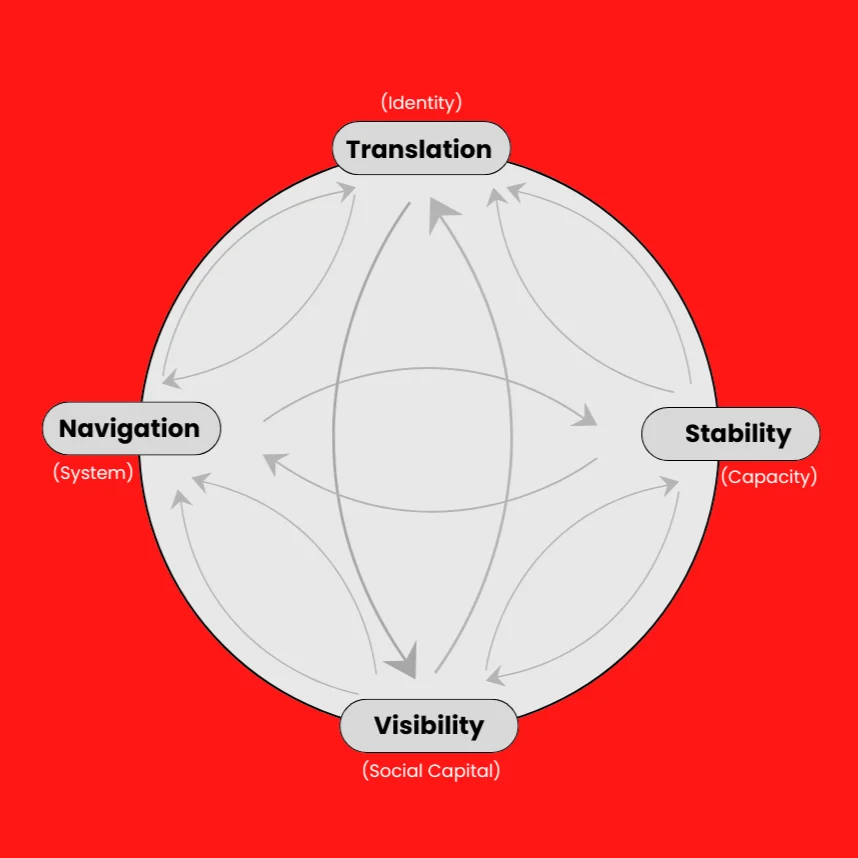
Main signal
Stability
- Primary
- Stability
- Secondary
- Visibility
- Translation
- Supporting
- Navigation
Everyday meaning
What this means in everyday life
This episode is about learning to see systems before rushing to solutions. Carla shows how unlearning, bias, and complexity shape how people understand problems.
Slow the solution
A fast answer can miss the real pattern if people have not understood the system around the problem.
Notice old assumptions
Unlearning begins when people see which habits or beliefs are shaping their first interpretation.
Look for patterns
Systems thinking helps people connect behavior, relationships, incentives, and unintended consequences.
Learn with humility
Complex problems require curiosity and patience because no single viewpoint can explain everything.
Everyday question
Can better action begin by undoing what we think we already know?
Editorial Report
What this conversation reveals.
This conversation is about the discipline of undoing. Carla Traini does not frame complexity as something to simplify too quickly. She approaches it as something that asks for wider attention: to systems, cultures, behaviors, biases, disciplines, emotions, and the hidden assumptions behind familiar processes.
What stands out
The first thing that stands out is Carla’s insistence on seeing both the forest and the trees. She does not reject detail. She asks us to place detail inside a wider system. That shift matters because many decisions become narrow when people only look at one tree: one product, one region, one role, one customer, or one familiar problem.
The second thing that stands out is her cross-disciplinary way of thinking. Design, anthropology, psychology, education, and neuroscience are not separate interests in this conversation. They are ways of approaching the same question: why do humans think and behave the way they do?
The third thing that stands out is her warning about passion. Carla does not dismiss passion. She sees it as energy. But she warns that passion can become dangerous when it fuses too tightly with identity and prevents entrepreneurs from assessing reality clearly or letting go when needed.
The fourth thing that stands out is the practice of undoing. Instead of asking people to learn one more tool, Carla asks them to take apart the process they already use. Reordering, removing, reversing, or questioning a familiar sequence can reveal assumptions that were invisible before.
Why it matters
Many international professionals, founders, students, and educators are trying to navigate complex systems with tools that were built for simpler contexts. This episode offers a grounded practice: before adding more knowledge, examine how you already know. Stability in complexity may begin with the ability to unlearn.
Activation lens
This is a Stability episode. It shows how people can stay grounded in complexity by pausing, unpacking assumptions, and reconfiguring familiar processes. Visibility matters because biases and systems need to be seen. Translation matters because disciplines need to speak to each other. Navigation matters because future-ready education and work require more flexible routes.
A question to carry
What familiar way of solving problems do you need to undo before you can see the system differently?
Next steps
Where to go next
Start with one small step from here. Check your situation, clarify your profile, explore the wider context, or keep following the stories.