
Bennu by Flux ForwardChapter One · Episode 28
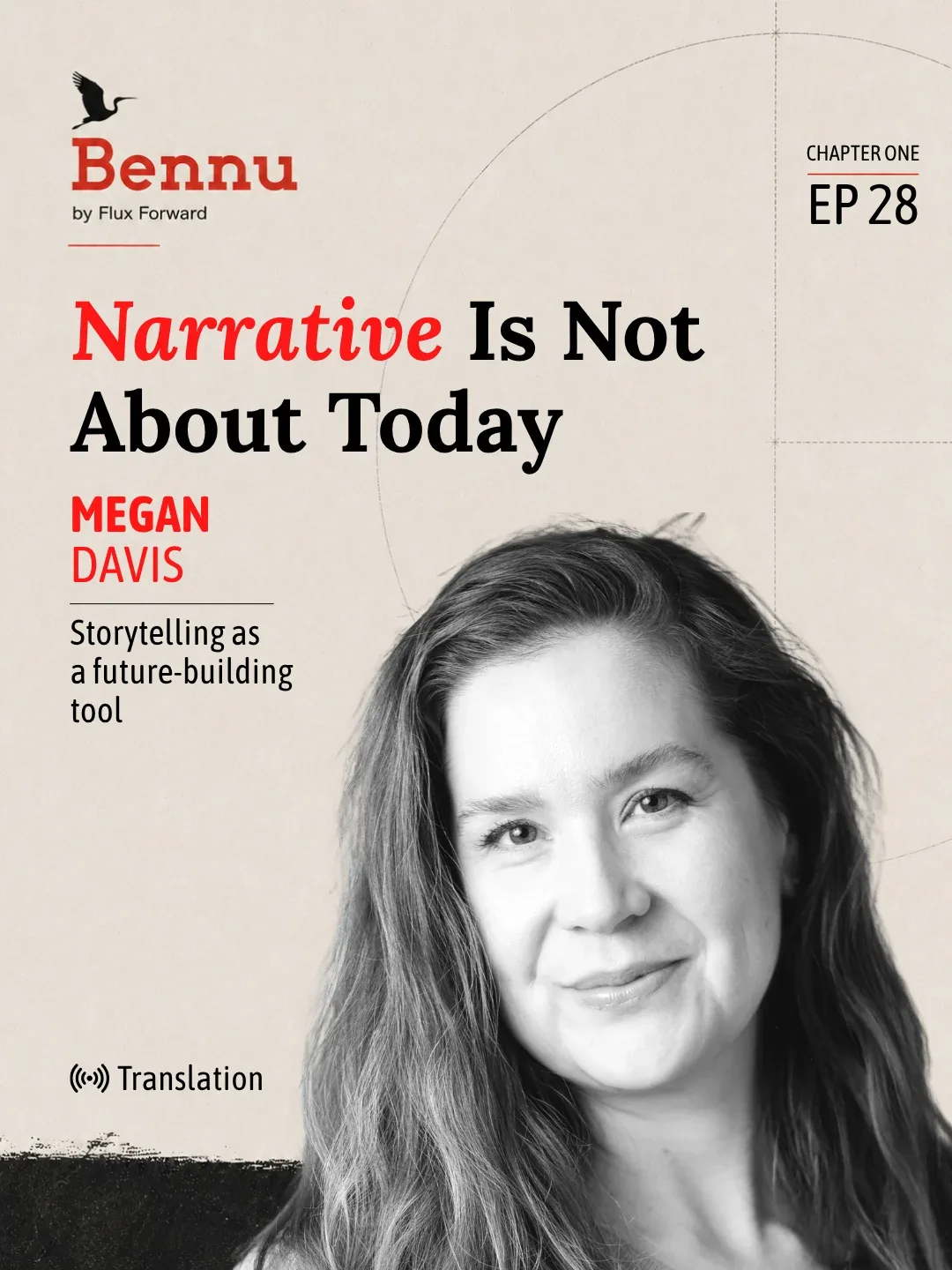
Narrative Is Not About Today
Megan Davis on strategic storytelling, authentic voices, and narrative as a future-building tool.
Where this connects
What this episode helps you notice.
Main thing to notice
Translation
How your experience becomes understandable to other people.
Related skill
Visibility
How your value becomes easier for others to recognize.
What to do with this
Notice where this story points to a next step in your own context.
Browse related stories
Conversation frame
Narrative Is Not About Today
Why this conversation still matters
Megan Davis speaks about narrative as more than communication.
This Bennu by Flux Forward conversation explores storytelling as a strategic practice: finding authentic voices, co-designing shared narratives, shaping culture, helping startups explain the future they are building, and moving beyond narrow storytelling frameworks.
In noisy environments, people often broadcast more without becoming clearer. Megan’s work shows that story can create direction when it is rooted in real voices and connected to the change people want to make.
The main pattern in this episode is the shift from stories to strategic narrative. Stories are the episodes, moments, voices, and lived experiences. Strategic narrative is the thread that connects them and helps people understand what future those stories are moving toward.
Guest
Megan Davis
A Bennu conversation about the human story behind a Flux Forward signal.
Open LinkedIn profileListen for
Notice where this story points to a next step in your own context.
- Translation
- Visibility
Key signals
What the episode reveals.
Main pattern
Your experience becomes easier to use when you can name what it shows.
Bennu holds the story. Flux Forward helps turn it into a clearer next step.
Main thing to notice
Translation
How your experience becomes understandable to other people.
Related skill or context
Visibility
How your value becomes easier for others to recognize.
Context
Context matters
Megan Davis on strategic storytelling, authentic voices, and narrative as a future-building tool.
What to try next
Start smaller
Look for one conversation, one clearer explanation, or one better example that would make the next step easier to act on.
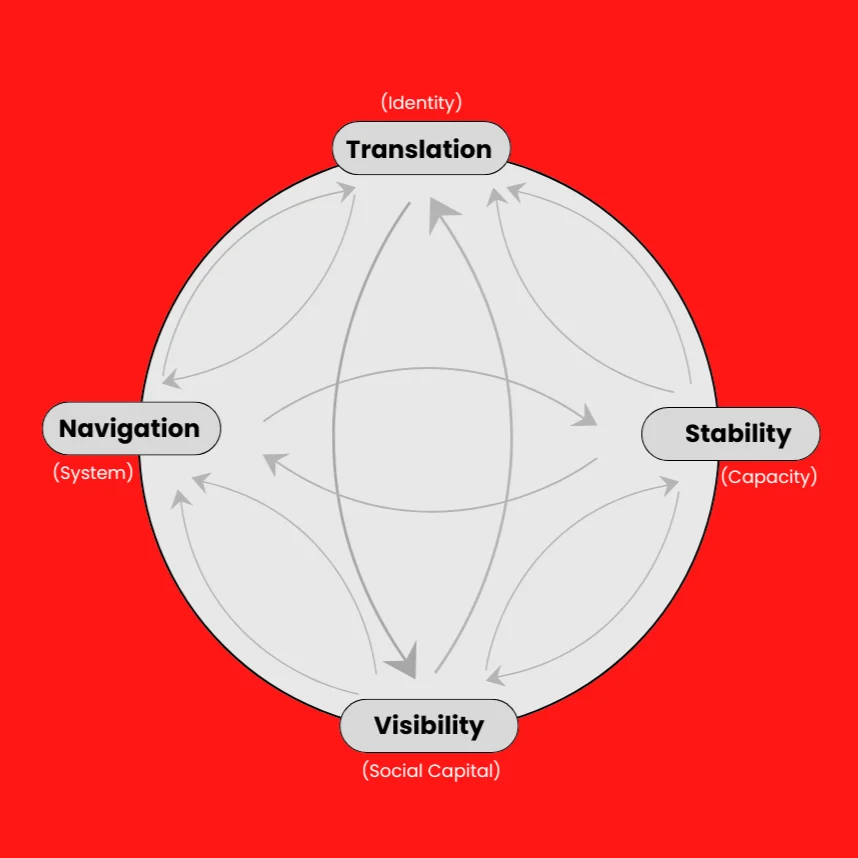
Activation mapping
How this story maps into activation.
Main signal
Translation
- Primary
- Translation
- Secondary
- Visibility
- Navigation
- Supporting
- Stability
Everyday meaning
What this means in everyday life
This episode is about using narrative to help people understand what is being built. Megan shows how authentic voices and strategic storytelling can shape future direction.
Find the story
A strong narrative helps people understand not only what exists now, but what could become possible.
Use real voices
Stories become more trusted when they come from people close to the work and not only from branding.
Explain the future
Startups and teams need language that makes the change they are building easier to grasp.
Shape shared meaning
Narrative can help groups align around why the work matters and where it is trying to go.
Everyday question
Can a clearer story help people move toward a future they cannot fully see yet?
Editorial Report
What this conversation reveals.
This conversation is about story as a future-building practice. Megan Davis does not treat storytelling as decoration, branding, or a way to make communication more emotional. She treats narrative as a strategic tool that helps people understand where they are going, what change they are inviting others into, and which voices need to be amplified.
What stands out
The first thing that stands out is Megan’s idea that narrative is not about today. A story can describe what happened, but a strategic narrative points toward what is becoming possible. This is especially important for startups, communities, and organizations trying to bring people into a future that does not fully exist yet.
The second thing that stands out is her attention to authentic voices. Megan’s work begins with listening, co-design, and real stories. Rather than inventing a message from the outside, she looks for the patterns that are already present in the stories people tell.
The third thing that stands out is the distinction between a story and a narrative. Stories are moments, examples, episodes, and lived experiences. Narrative is the thread that connects them and makes the direction clear. That distinction is useful for anyone trying to create change in a noisy environment.
The fourth thing that stands out is Megan’s critique of the hero’s journey as the default storytelling model. She reminds us that there is no single universal structure for story. Different cultures, contexts, and communities carry different narrative forms, and those forms matter.
Why it matters
Many founders, changemakers, community builders, and professionals are trying to explain what they are building before the future is obvious to others. This episode shows that narrative can help make that future easier to understand, but only when it is rooted in real stories, clear purpose, and respect for context.
Activation lens
This is a Translation episode. It shows how lived experience, culture, voice, and future direction can be translated into a narrative people can understand and act on. Visibility matters because authentic voices need to be found and amplified. Navigation matters because narrative helps people move through noise. Stability matters because shared stories can hold culture during change.
A question to carry
What story are you telling today that helps people understand the future you are trying to build?
Next steps
Where to go next
Start with one small step from here. Check your situation, clarify your profile, explore the wider context, or keep following the stories.