
Bennu by Flux ForwardChapter One · Episode 27
Futures Thinking Is a Team Sport
Erik Korsvik Østergaard on anticipatory leadership, plasticity, and turning futures thinking into action.
Where this connects
What this episode helps you notice.
Main thing to notice
Navigation
How you find your way through unfamiliar systems, choices, and routes.
Related skill
Stability
What needs to feel steady before the next step becomes possible.
What to do with this
Notice where this story points to a next step in your own context.
Browse related stories
Conversation frame
Futures Thinking Is a Team Sport
Why this conversation still matters
Erik Korsvik Østergaard brings an engineer’s mindset to futures work: not to reduce the future to prediction, but to help organizations structure exploration, transformation, and action.
This Bennu by Flux Forward conversation moves through anticipatory leadership, sensing, assumptions, time horizons, grassroots change, top-down strategy, and the leadership trait Erik calls plasticity.
Many organizations talk about the future, but struggle to turn that thinking into real transformation. Erik’s work shows that futures thinking becomes useful when it is shared, structured, tested, and connected to decisions, culture, business models, and organizational design.
The main pattern in this episode is that futures thinking needs structure and people. Organizations need to sense what is changing, explore possible futures in structured ways, and then plan backward from those futures into practical steps, while keeping enough plasticity to change their minds.
Guest
Erik Korsvik Østergaard
A Bennu conversation about the human story behind a Flux Forward signal.
Open LinkedIn profileListen for
Notice where this story points to a next step in your own context.
- Navigation
- Stability
Key signals
What the episode reveals.
Main pattern
Your experience becomes easier to use when you can name what it shows.
Bennu holds the story. Flux Forward helps turn it into a clearer next step.
Main thing to notice
Navigation
How you find your way through unfamiliar systems, choices, and routes.
Related skill or context
Stability
What needs to feel steady before the next step becomes possible.
Context
Context matters
Erik Korsvik Østergaard on anticipatory leadership, plasticity, and turning futures thinking into action.
What to try next
Start smaller
Look for one conversation, one clearer explanation, or one better example that would make the next step easier to act on.
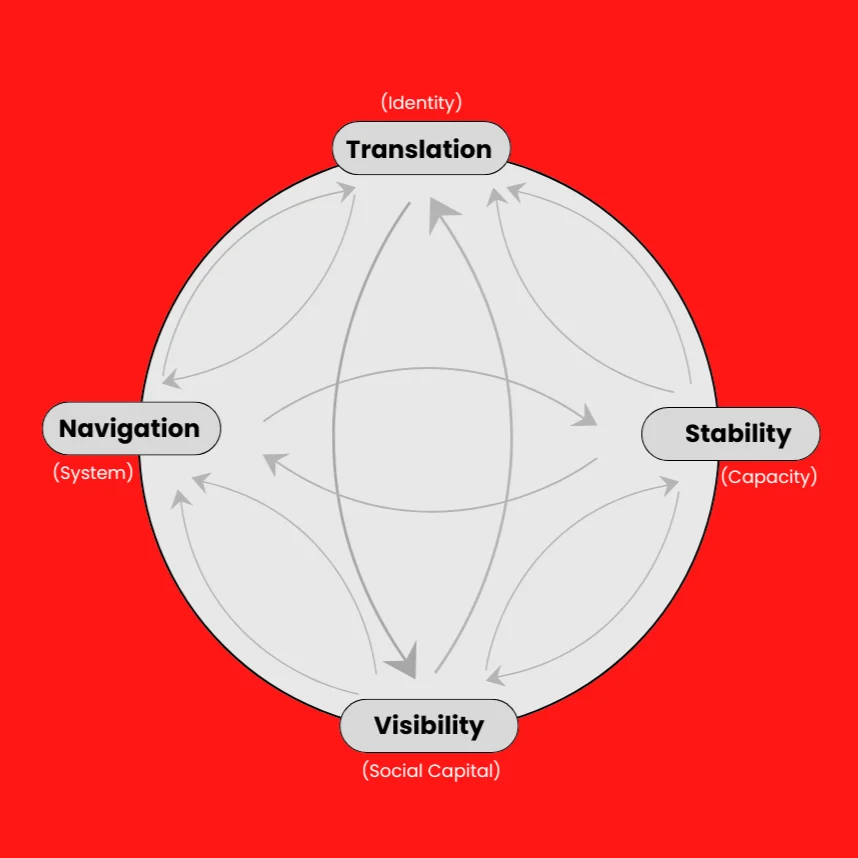
Activation mapping
How this story maps into activation.
Main signal
Navigation
- Primary
- Navigation
- Secondary
- Stability
- Visibility
- Supporting
- Translation
Everyday meaning
What this means in everyday life
This episode is about making futures thinking practical inside organizations. Erik shows how teams can sense change, test assumptions, and turn exploration into action.
Think as a team
Future work becomes stronger when it is shared across the organization instead of held by one expert.
Test assumptions
Teams make better choices when they surface what they believe and check whether it still holds.
Create plasticity
Organizations stay more adaptable when structures allow people to learn, shift, and respond quickly.
Move into action
Exploring the future matters most when it changes decisions, experiments, and everyday priorities.
Everyday question
Can futures thinking become a team practice instead of a planning exercise?
Editorial Report
What this conversation reveals.
This conversation is about turning futures thinking into organizational movement. Erik Korsvik Østergaard does not treat the future as something to predict from a distance. He treats it as something teams can explore, structure, simulate, question, and use to make better decisions in the present. His language of futures doing gives the episode a practical, organizational edge.
What stands out
The first thing that stands out is Erik’s engineering lens. He is not trying to remove uncertainty. He is trying to create enough structure for people to work with it. That structure matters because many organizations either over-control the future through prediction or avoid futures work because it feels too abstract.
The second thing that stands out is the distinction between change and transformation. Change management often assumes a clearer movement from A to B. Transformation asks people to move toward something less certain. Futures thinking helps organizations explore not only where they might go, but also what assumptions, fears, hopes, and power dynamics show up along the way.
The third thing that stands out is the idea that futures thinking is a team sport. Erik describes grassroots and top-down change as different but connected forces. The most useful work happens when people across levels, functions, and time horizons can understand each other and act with more shared awareness.
The fourth thing that stands out is plasticity. Erik uses it as a leadership trait: the ability to change your mind based on what you have just learned or heard. In uncertain systems, this may be one of the most practical forms of intelligence.
Why it matters
Many leaders, founders, communities, and organizations are trying to become future-ready while still being pulled into reaction mode. This episode shows that futures work does not have to stay abstract. It can become a structured practice for sensing, exploring, planning, deciding, and adapting together.
Activation lens
This is a Navigation episode. It shows how organizations can find routes through uncertainty by combining structure, shared exploration, assumptions work, and future-back planning. Stability matters because structure helps people stay grounded. Visibility matters because assumptions and myths need to surface. Translation matters because foresight has to become usable organizational language.
A question to carry
What would change if your team treated futures thinking as a shared practice, not a solo prediction?
Next steps
Where to go next
Start with one small step from here. Check your situation, clarify your profile, explore the wider context, or keep following the stories.