
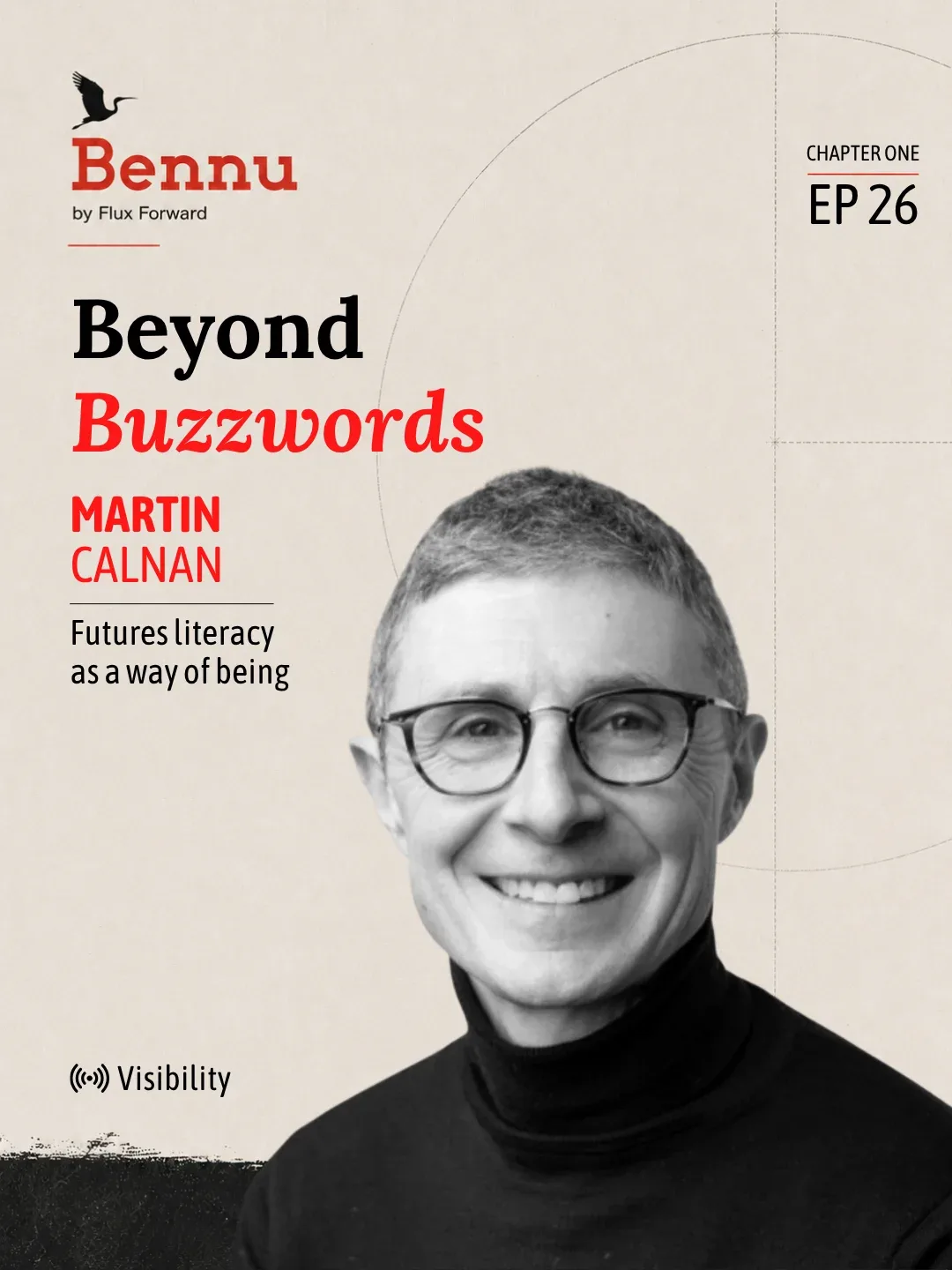
Bennu by Flux ForwardChapter One · Episode 26
Beyond Buzzwords
Martin Calnan on futures literacy as a way of being, rethinking value, and asking whose voice is not being heard.
Where this connects
What this episode helps you notice.
Main thing to notice
Visibility
How your value becomes easier for others to recognize.
Related skill
Translation
How your experience becomes understandable to other people.
What to do with this
Notice where this story points to a next step in your own context.
Browse related stories
Conversation frame
Beyond Buzzwords
Why this conversation still matters
Martin Calnan invites us to move beyond familiar language and ask what our words are hiding.
This Bennu by Flux Forward conversation explores futures literacy not as a framework or buzzword, but as a way of being: questioning value, opportunity, leadership, power, community, vulnerability, and the voices that are missing from the story.
Many organizations and leaders use words like value, opportunity, impact, stakeholders, and innovation without asking what those words assume. Martin’s perspective shows why futures literacy matters in daily life: it helps people notice the frames they are using, the power they carry, and the relationships they may be overlooking.
The main pattern in this episode is the shift from buzzwords to being. When words like opportunity, value, stakeholder, and leadership go unquestioned, they reproduce old assumptions. Futures literacy helps people pause, look again, and practice a more relational way of thinking and acting.
Guest
Martin Calnan
A Bennu conversation about the human story behind a Flux Forward signal.
Open LinkedIn profileListen for
Notice where this story points to a next step in your own context.
- Visibility
- Translation
Key signals
What the episode reveals.
Main pattern
Your experience becomes easier to use when you can name what it shows.
Bennu holds the story. Flux Forward helps turn it into a clearer next step.
Main thing to notice
Visibility
How your value becomes easier for others to recognize.
Related skill or context
Translation
How your experience becomes understandable to other people.
Context
Context matters
Martin Calnan on futures literacy as a way of being, rethinking value, and asking whose voice is not being heard.
What to try next
Start smaller
Look for one conversation, one clearer explanation, or one better example that would make the next step easier to act on.
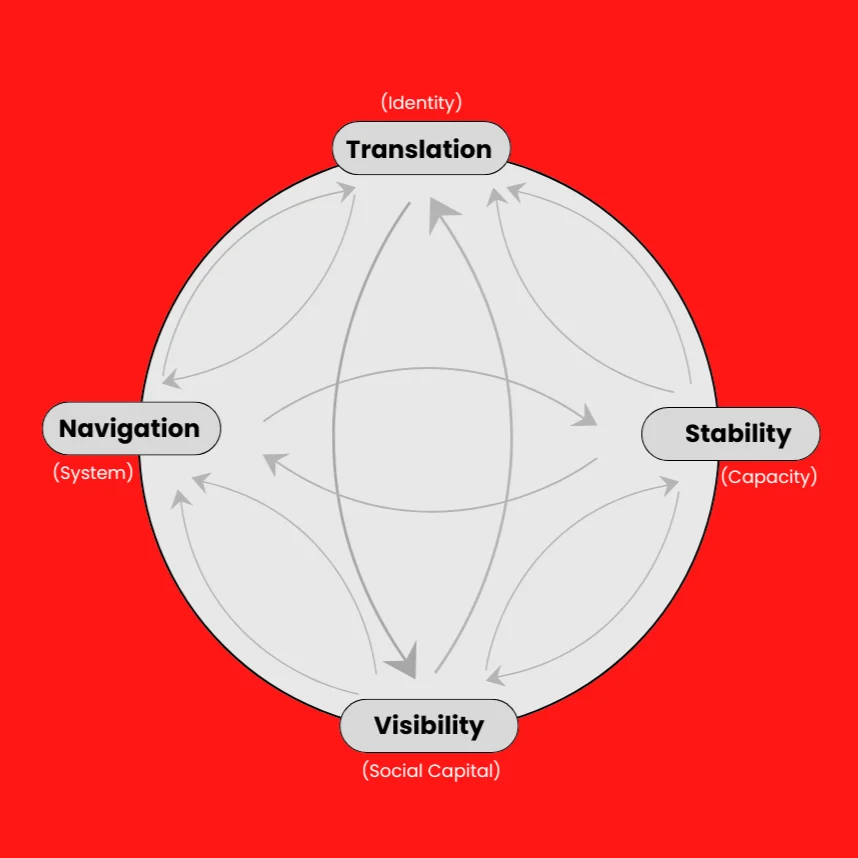
Activation mapping
How this story maps into activation.
Main signal
Visibility
- Primary
- Visibility
- Secondary
- Translation
- Stability
- Supporting
- Navigation
Everyday meaning
What this means in everyday life
This episode is about noticing when familiar words hide deeper questions. Martin shows how value, power, and missing voices shape the futures people imagine.
Question the words
Buzzwords become useful only when people ask what they mean, who uses them, and what they hide.
Notice missing voices
A conversation becomes stronger when it asks who is absent and whose experience has not been included.
Rethink value
Value is not only financial when decisions affect community, vulnerability, opportunity, and care.
Lead with humility
Better futures work starts when people admit what they do not know and listen more carefully.
Everyday question
Can familiar language become more honest when we ask what it leaves out?
Editorial Report
What this conversation reveals.
This conversation is about making the invisible assumptions behind our words visible. Martin Calnan does not treat futures literacy as a method to apply or a phrase to repeat. He approaches it as a way of being in the world: asking what our language assumes, who is missing from the story, what kinds of value we recognize, and how power operates in ordinary decisions.
What stands out
The first thing that stands out is Martin’s challenge to buzzwords. Words like opportunity, value, stakeholder, innovation, and leadership can sound useful, but they can also hide assumptions. Martin slows the conversation down and asks what those words mean, for whom, and at what cost.
The second thing that stands out is his focus on value. In finance and business, value is often framed economically. Martin does not reject economic value, but he asks whether that is enough. What other forms of value are being ignored? What relationships are being reduced? What costs are not being counted?
The third thing that stands out is the question of power. Martin asks people to look in the mirror before looking outward. Each person has some kind of power in their context. Futures literacy becomes more grounded when people recognize that power and the responsibility that comes with it.
The fourth thing that stands out is the repeated question: whose voice is not being heard? This is the episode’s clearest practical anchor. It turns futures literacy into an everyday practice of attention, humility, and relational awareness.
Why it matters
Many international professionals, founders, community builders, and leaders are trying to create change while using the same language and assumptions that shaped the systems they want to change. This episode reminds us that futures literacy is not only about imagining different futures. It is also about noticing the present differently, especially the voices, relationships, and vulnerabilities that are easy to miss.
Activation lens
This is a Visibility episode. It shows how assumptions, power, value definitions, and missing voices can become visible. Translation matters because familiar words need to be reinterpreted. Stability matters because vulnerability and community can help people stay with uncertainty. Navigation matters because asking better questions changes how people move through complexity.
A question to carry
In the futures you are imagining, whose voice is not being heard?
Next steps
Where to go next
Start with one small step from here. Check your situation, clarify your profile, explore the wider context, or keep following the stories.