
Bennu by Flux ForwardChapter One · Episode 25
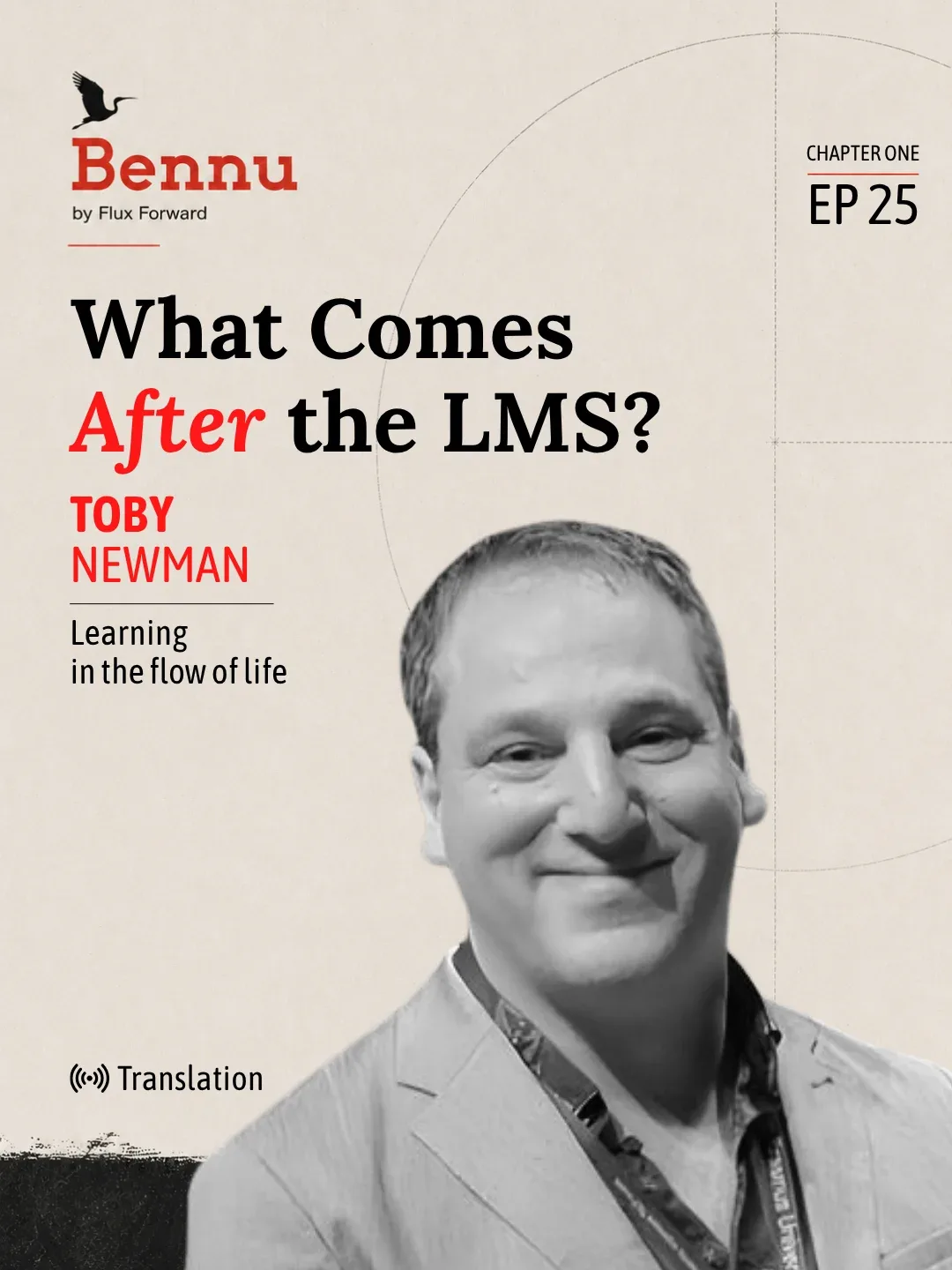
What Comes After the LMS?
Toby Newman on learning in the flow of life, AI literacy, and the future of human-centered L&D.
Where this connects
What this episode helps you notice.
Main thing to notice
Translation
How your experience becomes understandable to other people.
Related skill
Navigation
How you find your way through unfamiliar systems, choices, and routes.
What to do with this
Notice where this story points to a next step in your own context.
Browse related stories
Conversation frame
What Comes After the LMS?
Why this conversation still matters
Toby Newman challenges the old assumption that people should leave their work context, enter an LMS, complete content, and somehow emerge transformed.
This Bennu by Flux Forward conversation explores learning in the flow of work, AI literacy, digital coaches, personalized support, and why L&D needs to become more human, contextual, and useful.
Many organizations still treat learning as a destination: a platform, a module, a course, or a one-time training. Toby argues that the future of learning is closer to the learner’s real context. People need support that arrives where work happens, adapts to their needs, and continues over time instead of disappearing after one session.
The main pattern in this episode is a shift from platform-first to learner-first. Learning needs to go to people: into their workflow, their questions, their tools, their rhythms, and their real moments of need. AI can help, but only when it is used to make learning more human and more accessible.
Guest
Toby Newman
A Bennu conversation about the human story behind a Flux Forward signal.
Open LinkedIn profileListen for
Notice where this story points to a next step in your own context.
- Translation
- Navigation
Key signals
What the episode reveals.
Main pattern
Your experience becomes easier to use when you can name what it shows.
Bennu holds the story. Flux Forward helps turn it into a clearer next step.
Main thing to notice
Translation
How your experience becomes understandable to other people.
Related skill or context
Navigation
How you find your way through unfamiliar systems, choices, and routes.
Context
Context matters
Toby Newman on learning in the flow of life, AI literacy, and the future of human-centered L&D.
What to try next
Start smaller
Look for one conversation, one clearer explanation, or one better example that would make the next step easier to act on.
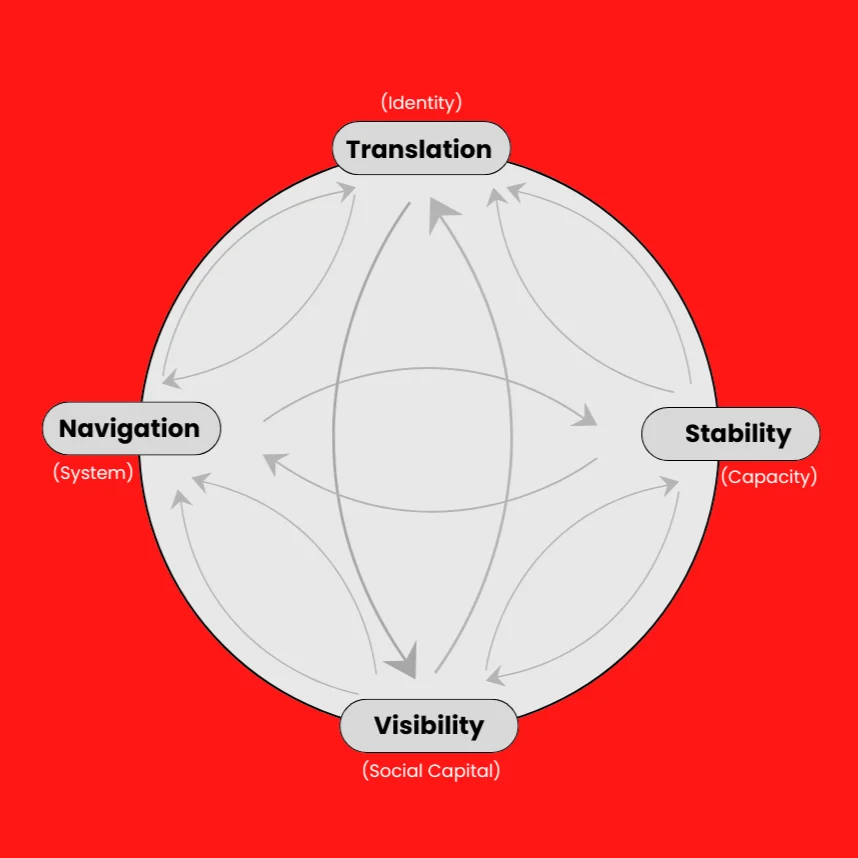
Activation mapping
How this story maps into activation.
Main signal
Translation
- Primary
- Translation
- Secondary
- Navigation
- Visibility
- Supporting
- Stability
Everyday meaning
What this means in everyday life
This episode is about making learning easier to use in real work, not only inside a course or platform. Toby points toward support that shows up where people already ask questions, use tools, and make decisions.
At the moment of need
Learning is most useful when it helps someone take the next step in a real task, not after the moment has already passed.
AI in daily work
AI literacy becomes useful when people know where AI helps, where it can mislead, and how to use it with judgment.
Design around people
Learning should fit someone's context, pace, questions, and responsibilities, not only the structure of a platform.
Practice over completion
Finishing a module is not the same as using an idea in a real project, conversation, or decision.
Everyday question
Can learning move closer to the work people are already doing?
Editorial Report
What this conversation reveals.
This conversation is about moving learning out of the container and back into life. Toby Newman does not reject technology, AI, or platforms. He rejects the assumption that learning happens simply because content has been uploaded somewhere and assigned to someone. His argument is practical and urgent: learning has to become more contextual, continuous, personal, and human.
What stands out
The first thing that stands out is Toby’s critique of the LMS mindset. The problem is not only the platform itself. It is the idea that learning is something people leave their work to consume, then return transformed. Toby pushes toward a different model: learning that appears closer to the moment of need.
The second thing that stands out is his view of L&D as a translation function. Learning professionals are supposed to take complexity and make it usable. That role matters even more with AI, because people need help understanding what AI is, what it can do, what it should not do, and how to use it without fear or blind trust.
The third thing that stands out is the shift from one-off training to ongoing learning experiences. Toby talks about nudges, micro-learning, practice, follow-up, and personal assistants. The point is not to make learning smaller for the sake of convenience. The point is to make learning continuous enough to become real capability.
The fourth thing that stands out is his human-first view of AI. Toby does not treat AI as a replacement for judgment. He treats it as an extended thinking partner: something that can help people prepare, reflect, search, plan, and create, while still requiring human editing, choice, and responsibility.
Why it matters
Many international professionals, founders, team leaders, and SMEs are trying to adapt in a world where work changes faster than traditional training systems can respond. This episode offers a useful lens: the future of learning is not only about better platforms. It is about meeting people where they are and making growth easier to access in daily work.
Activation lens
This is a Translation episode. It shows how learning can be translated from formal content into practical support, from platform logic into workflow logic, and from AI jargon into usable everyday capability. Navigation matters because people need routes into learning at the moment they need it. Visibility matters because AI literacy reveals possibilities and risks that otherwise stay hidden. Stability matters because continuous learning needs rhythm, trust, and support over time.
A question to carry
Where are you still asking people to go to learning, when learning could come closer to where they already are?
Next steps
Where to go next
Start with one small step from here. Check your situation, clarify your profile, explore the wider context, or keep following the stories.