
Bennu by Flux ForwardChapter One · Episode 30
Creativity Is Not Art
David Chislett on creative confidence, change, psychological safety, and doing things differently.
Where this connects
What this episode helps you notice.
Main thing to notice
Stability
What needs to feel steady before the next step becomes possible.
Related skill
Visibility
How your value becomes easier for others to recognize.
What to do with this
Notice where this story points to a next step in your own context.
Browse related stories
Conversation frame
Creativity Is Not Art
Why this conversation still matters
David Chislett reframes creativity as a human capacity, not an artistic label.
This Bennu by Flux Forward conversation explores creative confidence, fear, shame, psychological safety, team dynamics, creative problem solving, and why creativity matters when people and organizations face uncertainty and change.
Many people say they are not creative because creativity has been narrowed into art, talent, or personality. David’s work shows another view: creativity is the ability to solve problems, adapt, learn, experiment, and act when there is no ready-made answer.
The main pattern in this episode is that creativity begins with safety and practice. People are often more creative than they think, but the environment can make creativity feel unsafe. Creative confidence grows when people have psychological safety, practice observation, understand their problem-solving preferences, and learn that changing behavior does not mean losing who they are.
Guest
David Chislett
A Bennu conversation about the human story behind a Flux Forward signal.
Open LinkedIn profileListen for
Notice where this story points to a next step in your own context.
- Stability
- Visibility
Key signals
What the episode reveals.
Main pattern
Your experience becomes easier to use when you can name what it shows.
Bennu holds the story. Flux Forward helps turn it into a clearer next step.
Main thing to notice
Stability
What needs to feel steady before the next step becomes possible.
Related skill or context
Visibility
How your value becomes easier for others to recognize.
Context
Context matters
David Chislett on creative confidence, change, psychological safety, and doing things differently.
What to try next
Start smaller
Look for one conversation, one clearer explanation, or one better example that would make the next step easier to act on.
Activation mapping
How this story maps into activation.
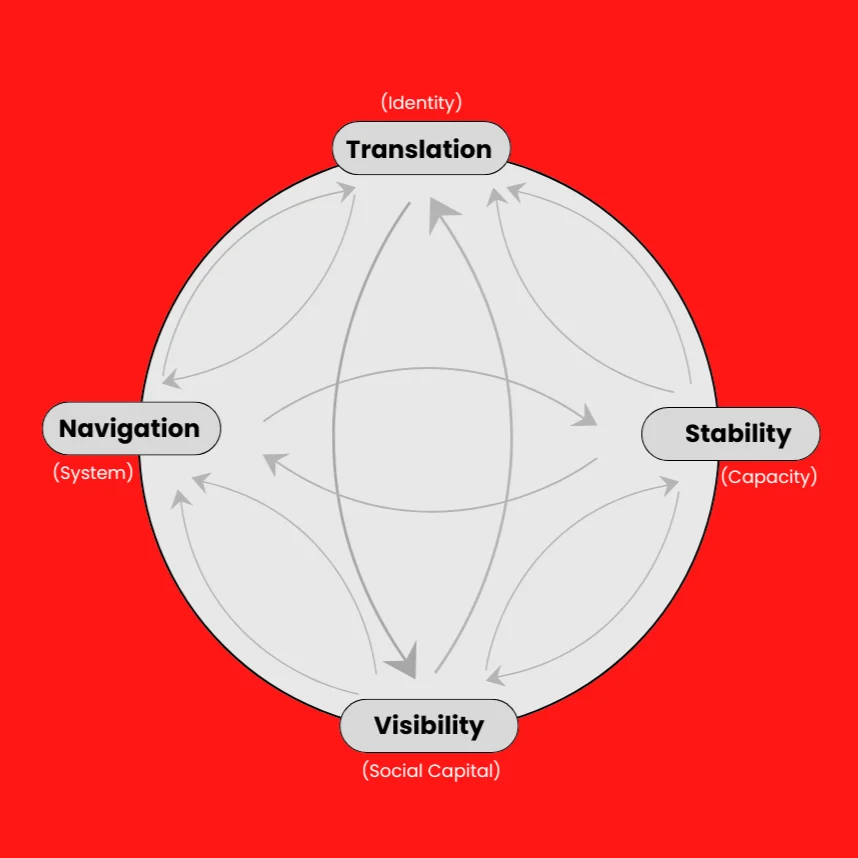
Main signal
Stability
- Primary
- Stability
- Secondary
- Visibility
- Navigation
- Supporting
- Translation
Everyday meaning
What this means in everyday life
This episode is about creativity as a practical human capacity. David shows how confidence, safety, and permission help people do things differently.
Redefine creativity
Creativity is not only art, it is the ability to approach problems and possibilities in new ways.
Make it safe
People try different ideas when the environment reduces shame, fear, and the cost of being wrong.
Build confidence
Creative confidence grows through small experiments that prove people can make and adjust ideas.
Use difference
Teams become more inventive when different ways of thinking are welcomed instead of filtered out.
Everyday question
Can creativity become easier when people feel safe enough to try?
Editorial Report
What this conversation reveals.
This conversation is about creativity as a condition for change. David Chislett does not treat creativity as a special talent reserved for artists. He treats it as a human capacity: the ability to solve problems, adapt, notice patterns, experiment, learn, and do things differently when the old route no longer works.
What stands out
The first thing that stands out is David’s distinction between creativity and art. Art can be a product of creativity, but creativity itself is much wider. It appears in problem solving, business, learning, adaptation, innovation, and the courage to try something without knowing exactly how it will turn out.
The second thing that stands out is the role of psychological safety. Creativity requires exposure. People have to risk being wrong, strange, early, unfinished, or misunderstood. If the environment punishes those moments, creative confidence disappears. This makes creativity a team and culture issue, not only an individual mindset issue.
The third thing that stands out is David’s advice for getting unstuck. Thinking harder about the same problem can make stuckness worse. Breaks, attention shifts, observation, and a willingness to let the wider mind keep working can open new routes.
The fourth thing that stands out is the reminder that people are not their behavior. Many people avoid doing things differently because they fear different behavior means becoming someone else. David reframes this: behavior can change while identity remains intact.
Why it matters
Many international professionals, founders, students, and teams are trying to adapt in a world where the next step is not always obvious. Creativity, in this episode, becomes a practical capacity for living with uncertainty. It helps people experiment, collaborate, notice differently, and stay open when change asks for a new response.
Activation lens
This is a Stability episode. It shows how creative confidence can help people stay steady enough to act under uncertainty. Visibility matters because people need to see creativity beyond art. Navigation matters because getting unstuck requires new routes. Translation matters because teams need language for different creative styles and preferences.
A question to carry
Where are you avoiding a different behavior because you are afraid it might change who you are?
Next steps
Where to go next
Start with one small step from here. Check your situation, clarify your profile, explore the wider context, or keep following the stories.