
Bennu by Flux ForwardChapter One · Episode 22
Holding Space for Change
Miranda Lewis on leadership, learning, futures thinking, and facilitation in practice.
Where this connects
What this episode helps you notice.
Main thing to notice
Stability
What needs to feel steady before the next step becomes possible.
Related skill
Navigation
How you find your way through unfamiliar systems, choices, and routes.
What to do with this
Notice where this story points to a next step in your own context.
Browse related stories
Conversation frame
Holding Space for Change
Why this conversation still matters
Miranda Lewis shares what it means to hold space for organizations and people working toward social and environmental change.
This Bennu by Flux Forward conversation explores facilitation, futures literacy, power, reflective practice, psychological safety, and the practical work of helping groups think, learn, and move together.
Change work often happens under pressure: complex stakeholders, limited time, power dynamics, uncertainty, and emotional weight. Miranda’s work shows that progress is not only about strategy or answers. It is also about creating spaces where people can reflect, ask better questions, name what matters, and notice what needs to change.
The main pattern in this episode is that space comes before movement. Groups often need space for reflection, space for different voices, space for power to be named, and space for uncertainty to be held without rushing too quickly into action.
Guest
Miranda Lewis
A Bennu conversation about the human story behind a Flux Forward signal.
Open LinkedIn profileListen for
Notice where this story points to a next step in your own context.
- Stability
- Navigation
Key signals
What the episode reveals.
Main pattern
Your experience becomes easier to use when you can name what it shows.
Bennu holds the story. Flux Forward helps turn it into a clearer next step.
Main thing to notice
Stability
What needs to feel steady before the next step becomes possible.
Related skill or context
Navigation
How you find your way through unfamiliar systems, choices, and routes.
Context
Context matters
Miranda Lewis on leadership, learning, futures thinking, and facilitation in practice.
What to try next
Start smaller
Look for one conversation, one clearer explanation, or one better example that would make the next step easier to act on.
Activation mapping
How this story maps into activation.
Main signal
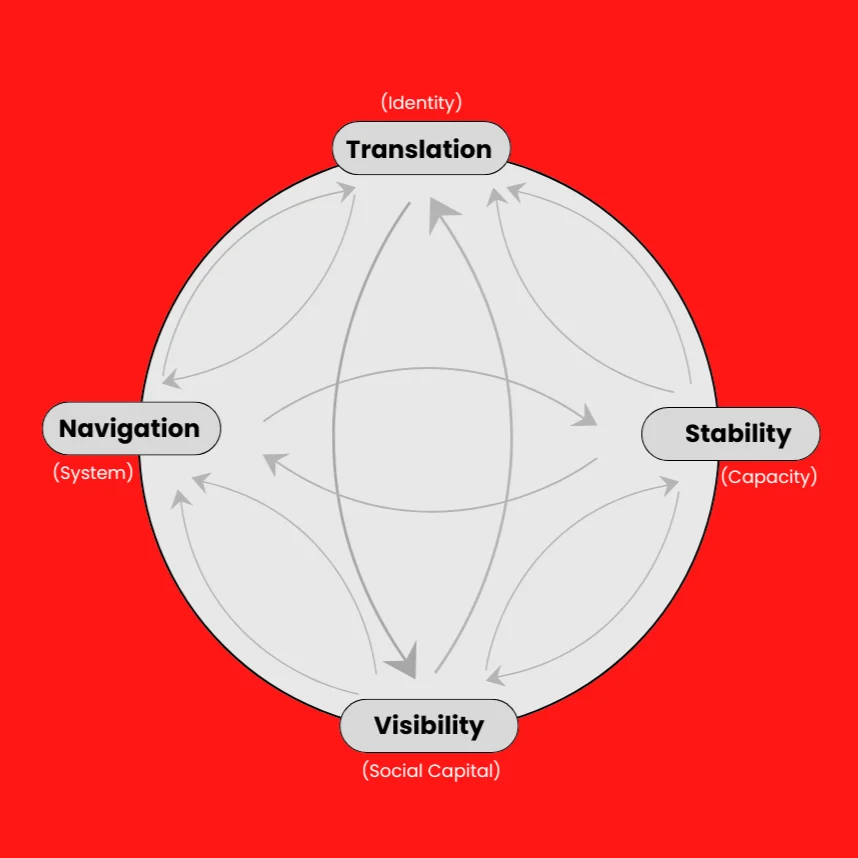
Stability
- Primary
- Stability
- Secondary
- Navigation
- Visibility
- Supporting
- Translation
Everyday meaning
What this means in everyday life
This episode is about helping people and groups work through change with care. Miranda shows how facilitation creates space for reflection, safety, and shared movement.
Make space first
Groups think better when there is room to slow down, listen, and notice what is happening.
Name power gently
Change work becomes more honest when people can notice who is heard, who is quiet, and why.
Reflect before moving
A pause for reflection can prevent teams from repeating the same patterns with new language.
Hold shared learning
Facilitation helps people learn together without forcing one person to carry the whole process.
Everyday question
Can change move better when people have enough space to think together?
Editorial Report
What this conversation reveals.
This conversation is about the kind of space change needs before it can become real. Miranda Lewis works with organizations that are trying to make a difference, but she does not describe change as a straight line from strategy to impact. She describes it as a human process: full of power dynamics, relationships, reflection, uncertainty, and the need for people to think together.
What stands out
The first thing that stands out is Miranda’s understanding of facilitation as holding space. She does not frame herself as the person who brings all the wisdom into the room. Her role is to shape the conditions where others can bring their own wisdom, notice what matters, and think more honestly together.
The second thing that stands out is the connection between safety and challenge. Miranda is clear that psychological safety matters, but not as a way to avoid difficulty. Safety makes it possible to ask harder questions, name power dynamics, and move beyond the first layer of conversation.
The third thing that stands out is her use of creative methods. Music, postcards, collage, images, and other forms of non-verbal expression are not decorative extras. They help people enter a different mode of thinking and loosen the professional masks that can block deeper reflection.
The fourth thing that stands out is her advice to notice when you feel silenced. That moment can be painful, but it can also be informative. It may point toward power, values, injustice, or something that matters deeply enough to guide future work.
Why it matters
Many international students, early-career professionals, facilitators, founders, and organizational leaders are trying to create change in systems that are complex and uncertain. This episode shows that change work is not only about being energetic or visionary. It also requires reflective space, power awareness, good questions, and the courage to stay present with what is difficult.
Activation lens
This is a Stability episode. It shows how people and organizations can stay grounded enough to work with change. Navigation matters because groups need routes through uncertainty. Visibility matters because power, silence, and hidden assumptions need to be noticed. Translation matters because reflection helps turn action into learning.
A question to carry
Where do you need to create more space before asking people to move?
Next steps
Where to go next
Start with one small step from here. Check your situation, clarify your profile, explore the wider context, or keep following the stories.