
Bennu by Flux ForwardChapter One · Episode 23
Flying with Two Wings
Riel Miller on futures literacy, imagination, emergence, and learning to move with not-knowing.
Where this connects
What this episode helps you notice.
Main thing to notice
Navigation
How you find your way through unfamiliar systems, choices, and routes.
Related skill
Visibility
How your value becomes easier for others to recognize.
What to do with this
Notice where this story points to a next step in your own context.
Browse related stories
Conversation frame
Flying with Two Wings
Why this conversation still matters
Riel Miller invites us to rethink what it means to use the future.
This Bennu by Flux Forward conversation moves through murmuration, heterarchy, imagination, agency, not-knowing, and the difference between betting on the future and becoming open to emergence.
Many people are taught that being prepared means predicting better, planning harder, and reducing uncertainty. Riel offers another possibility: we need the wing of prediction, but also the wing of emergence. Without both, we cannot move well in a world shaped by difference, change, and the unknown.
The main pattern in this episode is that two wings are needed to fly. One wing is betting, prediction, and planning. The other is emergence, not-knowing, and openness. Futures literacy helps people recognize both, practice both, and avoid mistaking control for freedom.
Guest
Riel Miller
A Bennu conversation about the human story behind a Flux Forward signal.
Open LinkedIn profileListen for
Notice where this story points to a next step in your own context.
- Navigation
- Visibility
Key signals
What the episode reveals.
Main pattern
Your experience becomes easier to use when you can name what it shows.
Bennu holds the story. Flux Forward helps turn it into a clearer next step.
Main thing to notice
Navigation
How you find your way through unfamiliar systems, choices, and routes.
Related skill or context
Visibility
How your value becomes easier for others to recognize.
Context
Context matters
Riel Miller on futures literacy, imagination, emergence, and learning to move with not-knowing.
What to try next
Start smaller
Look for one conversation, one clearer explanation, or one better example that would make the next step easier to act on.
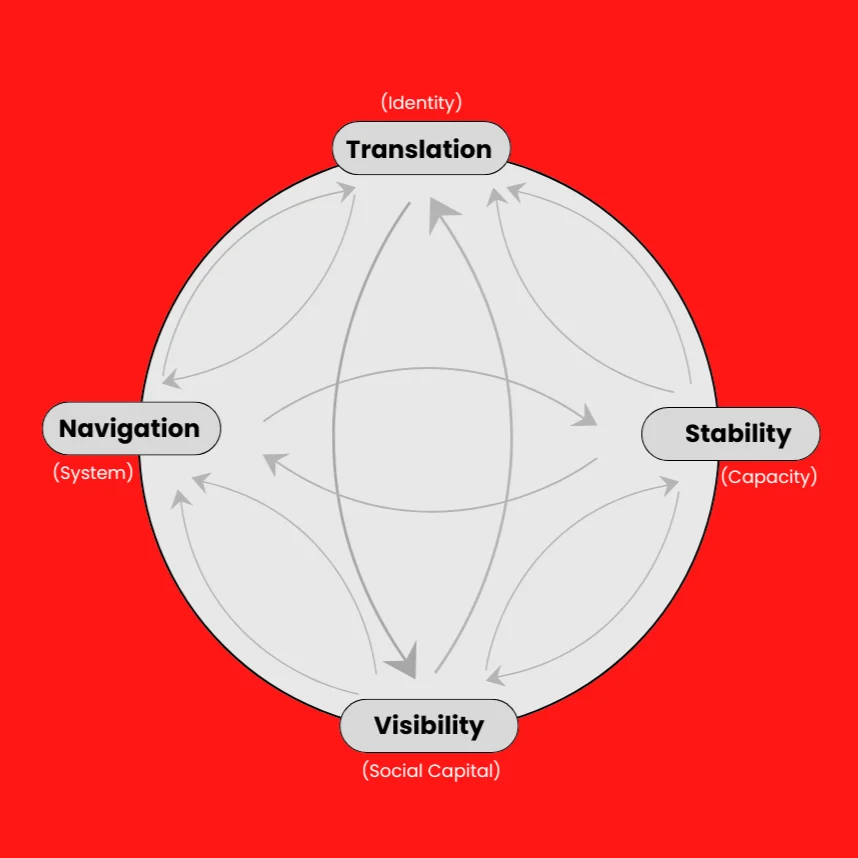
Activation mapping
How this story maps into activation.
Main signal
Navigation
- Primary
- Navigation
- Secondary
- Visibility
- Stability
- Supporting
- Translation
Everyday meaning
What this means in everyday life
This episode is about using the future without trying to control it. Riel shows how imagination and not-knowing can help people stay open to emergence.
Use not-knowing
Not-knowing can be useful when it helps people stop forcing old answers onto new situations.
Imagine differently
The future becomes more useful when it opens perception rather than only serving as a target.
Move with emergence
Some direction appears through interaction, experimentation, and attention to what is unfolding.
Loosen prediction
Preparation can include becoming less attached to one expected future and more awake to many possibilities.
Everyday question
Can not-knowing become part of how we learn to move?
Editorial Report
What this conversation reveals.
This conversation is about learning to move in a universe that cannot be reduced to prediction. Riel Miller offers futures literacy not as a technique for controlling tomorrow, but as a way of becoming more aware of how humans use the future in the present. The episode is philosophical, practical, and deeply concerned with freedom.
What stands out
The first thing that stands out is the image of murmuration. Riel uses the movement of starlings to show a different kind of order: fluid, relational, decentralized, and alive. It becomes a way to imagine heterarchy, a form of organization that is not based on fixed hierarchy, status, or control.
The second thing that stands out is the metaphor of two wings. Riel does not dismiss prediction, planning, or betting. He says that wing matters. But the second wing, emergence and not-knowing, is also needed. Without it, humans become trapped in the illusion that safety, success, and agency come only from control.
The third thing that stands out is his treatment of imagination. Imagination is not simply the production of more ideas or more scenarios. It depends on frames, assumptions, narratives, and the capacity to notice what has no name yet. Futures literacy begins when people become aware of how they are imagining.
The fourth thing that stands out is the connection between agency and humility. Riel challenges the idea that agency means power over the world. He points instead toward a deeper freedom: learning how to live as part of a changing universe, not as something separate from it.
Why it matters
Many international students, educators, founders, professionals, and leaders are under pressure to predict, perform, decide, and control. This episode offers a different invitation: practice using the future in more than one way. Bet when you need to bet, but also learn to stay open to emergence. Not-knowing is not a weakness. It may be the second wing.
Activation lens
This is a Navigation episode. It shows how people can move through uncertainty by practicing both prediction and emergence. Visibility matters because assumptions and frames need to be seen. Stability matters because confidence with not-knowing reduces fear. Translation matters because Riel gives language and metaphor to complex lived experience.
A question to carry
Where are you trying to fly with only one wing?
Next steps
Where to go next
Start with one small step from here. Check your situation, clarify your profile, explore the wider context, or keep following the stories.