
Bennu by Flux ForwardChapter One · Episode 21
From Struggles to Solutions
Nicholas Roy and Jelle Langen on FormuLearn, math learning, AI, and building while still in university.
Where this connects
What this episode helps you notice.
Main thing to notice
Navigation
How you find your way through unfamiliar systems, choices, and routes.
Related skill
Translation
How your experience becomes understandable to other people.
What to do with this
Notice where this story points to a next step in your own context.
Browse related stories
Conversation frame
From Struggles to Solutions
Why this conversation still matters
Nicholas Roy and Jelle Langen share how a personal frustration with understanding complex formulas became FormuLearn.
This Bennu by Flux Forward conversation follows their journey from an early idea to student interviews, product pivots, co-founder learning, AI possibilities, and the messy reality of building a company while still studying.
Many students struggle not because they lack motivation, but because missing prerequisite knowledge makes new concepts feel impossible to enter. Nicholas and Jelle’s story shows how founders can turn a lived pain point into a learning product by listening, testing, asking for help, and staying close to the real problem.
The main pattern in this episode is the shift from personal struggle to shared solution. The idea became stronger when it left their heads and met the people it was meant to help.
Guest
Nicholas Roy and Jelle Langen
A Bennu conversation about the human story behind a Flux Forward signal.
Open LinkedIn profileListen for
Notice where this story points to a next step in your own context.
- Navigation
- Translation
Key signals
What the episode reveals.
Main pattern
Your experience becomes easier to use when you can name what it shows.
Bennu holds the story. Flux Forward helps turn it into a clearer next step.
Main thing to notice
Navigation
How you find your way through unfamiliar systems, choices, and routes.
Related skill or context
Translation
How your experience becomes understandable to other people.
Context
Context matters
Nicholas Roy and Jelle Langen on FormuLearn, math learning, AI, and building while still in university.
What to try next
Start smaller
Look for one conversation, one clearer explanation, or one better example that would make the next step easier to act on.
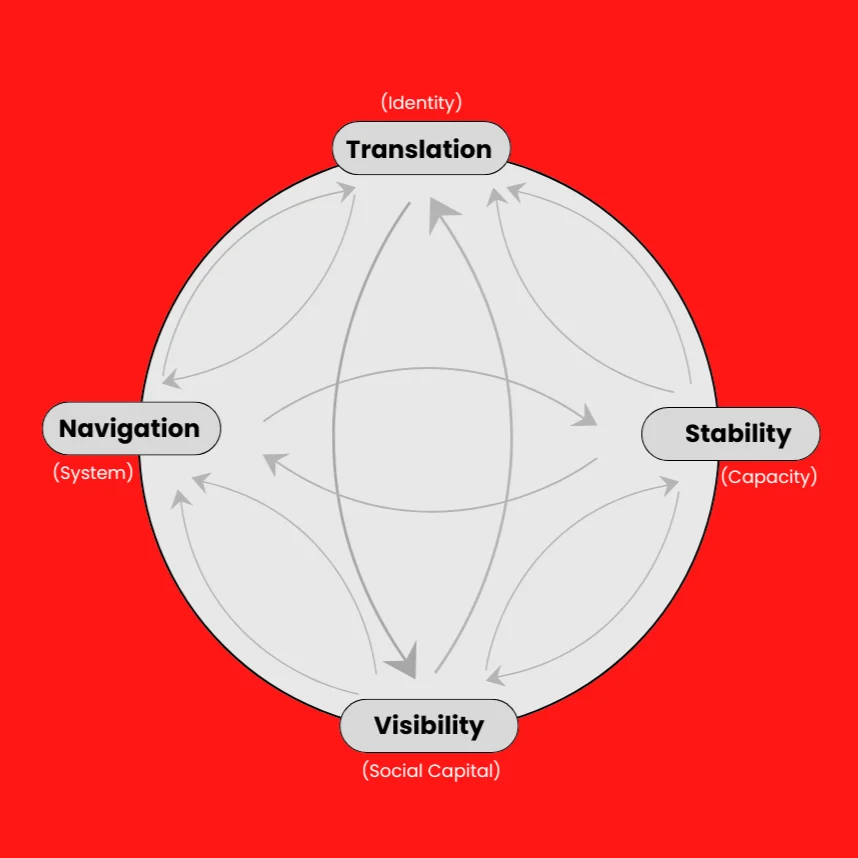
Activation mapping
How this story maps into activation.
Main signal
Navigation
- Primary
- Navigation
- Secondary
- Translation
- Stability
- Supporting
- Visibility
Everyday meaning
What this means in everyday life
This episode is about turning a learning frustration into a product idea. Nicholas and Jelle show how student founders can move from personal pain to shared problem solving.
Start from struggle
A useful product can begin with a problem the founder has personally felt and understands deeply.
Find missing steps
Learning breaks down when people cannot see the prerequisite knowledge they need for the next concept.
Validate with users
Student interviews can reveal whether an idea solves a real problem or only sounds good internally.
Build as learners
Young founders grow by testing assumptions, asking for help, and adjusting before the product is perfect.
Everyday question
Can a personal learning block become a solution that helps others move forward?
Editorial Report
What this conversation reveals.
This conversation is about turning a learning struggle into a route for action. Nicholas Roy and Jelle Langen did not begin FormuLearn with a perfect business plan. They began with frustration: the experience of getting stuck inside complex math because prerequisite knowledge was missing or hard to retrieve. The episode follows how that frustration became research, feedback, co-founder learning, and a product direction.
What stands out
The first thing that stands out is the clarity of the original pain point. FormuLearn is not trying to make math easier by removing challenge. It is trying to make the path through challenge more visible. Students often struggle because the missing piece is somewhere earlier in the chain. Helping them trace that gap can make learning feel less blocked.
The second thing that stands out is the shift from building to validating. Nicholas and Jelle began with the instinct many technical founders have: start building. VentureLab helped them slow down, speak with students, test assumptions, and understand what people actually needed. That shift is an important founder move.
The third thing that stands out is the co-founder dynamic. They describe themselves as different in temperament, but aligned in deeper values. That combination matters. A startup needs energy and direction, but it also needs brakes, steering, trust, and the ability to disagree without making the disagreement personal.
The fourth thing that stands out is their willingness to ask for help. They name expert coaching, mentors, lawyers, subsidy advisors, and people with more experience as part of how they learned. This is a useful message for students: university is not only a place for content. It is a place to access people.
Why it matters
Many students, early founders, and young professionals wait until they feel ready before starting. This episode offers a different pattern: start, ask, test, learn, and adjust. The path becomes clearer through action. For people navigating study, entrepreneurship, and future work, Nicholas and Jelle’s story shows that uncertainty is not a reason to stop. It is the material you learn with.
Activation lens
This is a Navigation episode. It shows how young founders move from personal frustration to a working direction through feedback, validation, and co-founder trust. Translation matters because complex math needs clearer pathways into understanding. Stability matters because building while studying requires resilience and shared values. Visibility matters because research makes hidden student struggles easier to see.
A question to carry
What problem have you personally struggled with that might become clearer if you tested it with other people?
Next steps
Where to go next
Start with one small step from here. Check your situation, clarify your profile, explore the wider context, or keep following the stories.