
Bennu by Flux ForwardChapter One · Episode 33
Slowing Down to Speed Up
Tzu-Yao Jerry Lin on facilitation, organizational anthropology, and rehumanizing work through deeper conversations.
Where this connects
What this episode helps you notice.
Main thing to notice
Stability
What needs to feel steady before the next step becomes possible.
Related skill
Translation
How your experience becomes understandable to other people.
What to do with this
Notice where this story points to a next step in your own context.
Browse related stories
Conversation frame
Slowing Down to Speed Up
Why this conversation still matters
Tzu-Yao Jerry Lin speaks about facilitation as a way to rehumanize work.
This Bennu by Flux Forward conversation moves through organizational anthropology, learning systems, top-down training, check-in questions, burnout, hosting oneself, systems change, and the need for slower, deeper conversations inside fast-moving organizations.
Many organizations try to optimize, automate, and move faster, while people inside them are close to burnout and disconnected from one another. Jerry’s work shows why slowing down is not a retreat from work. It is a way to understand the system, listen across roles, rebuild trust, and create conditions for more meaningful change.
The main pattern in this episode is to slow down to make sense together. People need space to make sense before they can move well. Facilitation is not only about running workshops. It is about creating moments where people can understand themselves, each other, and the system they are part of.
Guest
Tzu-Yao Jerry Lin
A Bennu conversation about the human story behind a Flux Forward signal.
Open LinkedIn profileListen for
Notice where this story points to a next step in your own context.
- Stability
- Translation
Key signals
What the episode reveals.
Main pattern
Your experience becomes easier to use when you can name what it shows.
Bennu holds the story. Flux Forward helps turn it into a clearer next step.
Main thing to notice
Stability
What needs to feel steady before the next step becomes possible.
Related skill or context
Translation
How your experience becomes understandable to other people.
Context
Context matters
Tzu-Yao Jerry Lin on facilitation, organizational anthropology, and rehumanizing work through deeper conversations.
What to try next
Start smaller
Look for one conversation, one clearer explanation, or one better example that would make the next step easier to act on.
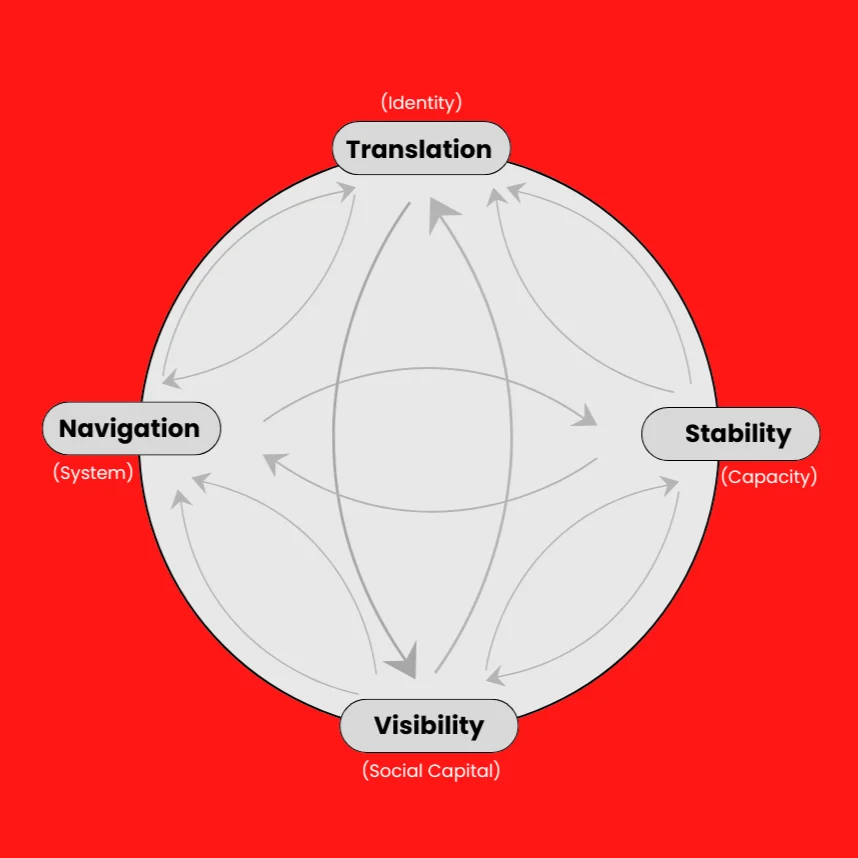
Activation mapping
How this story maps into activation.
Main signal
Stability
- Primary
- Stability
- Secondary
- Translation
- Navigation
- Supporting
- Visibility
Everyday meaning
What this means in everyday life
This episode is about slowing down enough for real conversation to happen. Jerry shows how facilitation and organizational anthropology can rehumanize work.
Slow the room
A slower conversation can reveal patterns that fast meetings often skip or silence.
Ask human questions
Simple check-ins can help people arrive as humans before they rush into tasks.
Notice the system
Organizational habits become clearer when people look at rituals, power, burnout, and daily interactions.
Host yourself first
Facilitators and leaders need to notice their own state before holding space for others.
Everyday question
Can slowing down help people work with more honesty and less exhaustion?
Editorial Report
What this conversation reveals.
This conversation is about the power of slowing down in systems that are always speeding up. Tzu-Yao Jerry Lin does not treat facilitation as a set of workshop techniques. He treats it as a way of rehumanizing work: creating space for people to arrive, speak, listen, understand the system, and notice what is really happening.
What stands out
The first thing that stands out is Jerry’s anthropological lens. He is interested in how people actually live and work inside organizations, not only what the formal process says should happen. That matters because many organizational problems are not caused by a lack of information. They are caused by disconnection between people, contexts, assumptions, and systems.
The second thing that stands out is the critique of top-down training. Jerry’s example from global learning and development shows that training can become disconnected from the real context where people work. Completion rates and satisfaction scores may look useful, but they do not always show whether learning changes daily practice.
The third thing that stands out is Jerry’s use of check-in questions. These small rituals are not decorative. They help people arrive, connect, shift energy, and build the quality of presence needed for better conversations.
The fourth thing that stands out is the idea of hosting oneself before hosting others. This is a strong reminder for facilitators, leaders, founders, caregivers, and changemakers. People cannot hold space well if they never make space for themselves.
Why it matters
Many international professionals, founders, educators, facilitators, and organizations are trying to create change while moving too fast to notice what the system is doing to people. This episode offers a counter-practice: slow down enough to make sense together. That may be the condition for better collaboration, better learning, and more humane transformation.
Activation lens
This is a Stability episode. It shows how people and organizations can become steady enough to change by creating space for reflection, conversation, and presence. Translation matters because lived experience needs to become system insight. Navigation matters because facilitation helps people find routes through complexity. Visibility matters because hidden needs, silos, and assumptions need to be surfaced.
A question to carry
What conversation are you rushing through that actually needs space to be hosted?
Next steps
Where to go next
Start with one small step from here. Check your situation, clarify your profile, explore the wider context, or keep following the stories.