
Bennu by Flux ForwardChapter One · Episode 32
Dare to Imagine
Birgitte Velde on futures literacy, change, sustainability, and courageous thinking.
Where this connects
What this episode helps you notice.
Main thing to notice
Navigation
How you find your way through unfamiliar systems, choices, and routes.
Related skill
Stability
What needs to feel steady before the next step becomes possible.
What to do with this
Notice where this story points to a next step in your own context.
Browse related stories
Conversation frame
Dare to Imagine
Why this conversation still matters
Birgitte Velde explores futures literacy as something practical, human, and close to everyday life.
This Bennu by Flux Forward conversation moves from childhood lessons on a strawberry farm to sustainability work, design thinking, business decisions, imagination, emotional responses to change, and the courage to imagine different futures.
Many people and organizations talk about the future as if it is far away, abstract, or only for specialists. Birgitte brings it closer. The future is already shaping today’s decisions: how we respond to regulations, climate change, business pressure, personal change, and the stories we tell ourselves about what is possible.
The main pattern in this episode is that imagination makes change more workable. People often avoid imagining because it brings up emotion. But when people practice imagining different futures, they can become more resilient, more creative, and more able to respond to change without freezing.
Guest
Birgitte Velde
A Bennu conversation about the human story behind a Flux Forward signal.
Open LinkedIn profileListen for
Notice where this story points to a next step in your own context.
- Navigation
- Stability
Key signals
What the episode reveals.
Main pattern
Your experience becomes easier to use when you can name what it shows.
Bennu holds the story. Flux Forward helps turn it into a clearer next step.
Main thing to notice
Navigation
How you find your way through unfamiliar systems, choices, and routes.
Related skill or context
Stability
What needs to feel steady before the next step becomes possible.
Context
Context matters
Birgitte Velde on futures literacy, change, sustainability, and courageous thinking.
What to try next
Start smaller
Look for one conversation, one clearer explanation, or one better example that would make the next step easier to act on.
Activation mapping
How this story maps into activation.
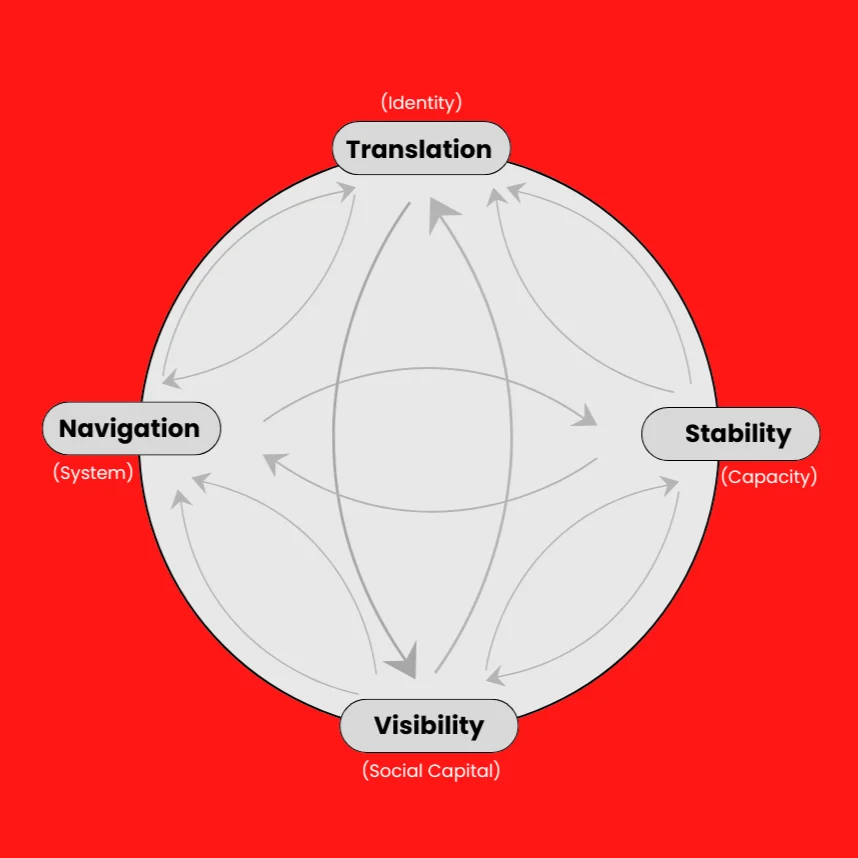
Main signal
Navigation
- Primary
- Navigation
- Secondary
- Stability
- Visibility
- Supporting
- Translation
Everyday meaning
What this means in everyday life
This episode is about imagination as a practical skill for change. Birgitte shows how courage, sustainability, and design thinking can open new choices.
Dare to imagine
People need permission to picture different futures before they can choose differently in the present.
Work with emotion
Change often brings fear, grief, hope, and resistance, so feelings are part of the work.
Prototype the future
Design thinking can turn big uncertainty into small experiments that people can learn from.
Connect to place
Sustainability becomes more grounded when people notice the real places and relationships their choices affect.
Everyday question
Can imagination become a practical way to begin changing what feels fixed?
Editorial Report
What this conversation reveals.
This conversation is about the courage to imagine. Birgitte Velde does not treat futures literacy as an abstract theory reserved for specialists. She brings it into daily life: the weather forecast, a career choice, a family change, a sustainability regulation, a business decision, or the emotional moment when a familiar future no longer feels possible.
What stands out
The first thing that stands out is Birgitte’s phrase “dare to imagine.” She names something important: imagination is not always easy or pleasant. Imagining a different future can bring up fear, grief, frustration, or resistance. But without imagination, people stay trapped inside the first version of the future they can see.
The second thing that stands out is her connection between futures literacy and sustainability. Birgitte sees present actions as shaping future conditions, especially around climate, environment, business, and regulation. Futures literacy becomes a way to ask what kind of future today’s choices are producing.
The third thing that stands out is the everyday nature of futures thinking. Birgitte does not only talk about large scenarios or formal labs. She points to simple examples: planning around the weather, imagining a career, responding to change, or thinking differently when life does not follow the expected path.
The fourth thing that stands out is her link to design thinking. Futures literacy is useful not only because it creates possible futures, but because it can help define the right problem. Before people rush to solutions, they can use imagination to see whether they are solving the real issue.
Why it matters
Many international professionals, founders, students, and organizations are trying to act in a world where change feels both urgent and emotionally difficult. This episode offers a practical reminder: becoming future-ready is partly about practicing imagination before the pressure arrives. The more people dare to imagine, the more routes they may see.
Activation lens
This is a Navigation episode. It shows how people and organizations can find routes through uncertainty by imagining different futures and using those images to act differently now. Stability matters because imagination can build resilience. Visibility matters because futures are already shaping today’s decisions. Translation matters because design thinking helps turn future images into better problem definitions.
A question to carry
What future are you afraid to imagine, and what might become possible if you did?
Next steps
Where to go next
Start with one small step from here. Check your situation, clarify your profile, explore the wider context, or keep following the stories.