
Bennu by Flux ForwardChapter One · Episode 12
Seeing Beyond the Present
How futures literacy helps people build agency in uncertain career moments
Where this connects
What this episode helps you notice.
Main thing to notice
Navigation
How you find your way through unfamiliar systems, choices, and routes.
Related skill
Stability
What needs to feel steady before the next step becomes possible.
What to do with this
Notice where this story points to a next step in your own context.
Browse related stories
Conversation frame
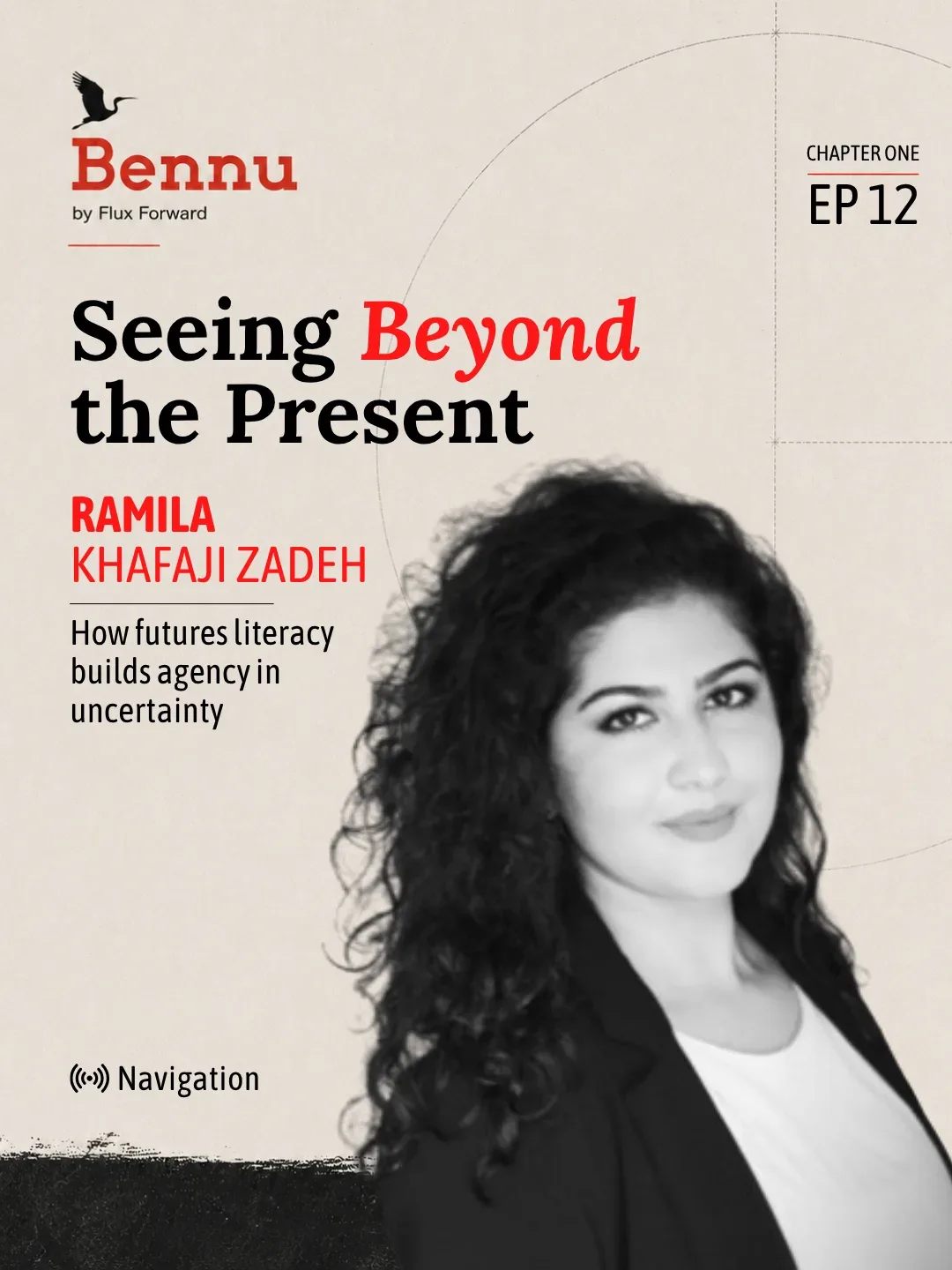
Seeing Beyond the Present
Why this conversation still matters
In this Chapter One Bennu conversation, Ben speaks with Ramila Khafaji Zadeh about futures literacy, emergence, uncertainty, and how people can regain a sense of agency when the path ahead is unclear.
Ramila explains futures literacy as the capability to imagine different futures in order to see the present differently. The conversation explores why the plural “futures” matters, why futures literacy is not mainly about prediction, and how active openness can support career decisions, organizational learning, and personal transitions.
Read through the Flux Forward Activation lens, this is a Navigation episode: uncertainty becomes easier to move through when people can imagine more than one possible path and choose a next step in the present.
Guest
Ramila Khafaji Zadeh
A Bennu conversation about the human story behind a Flux Forward signal.
Open LinkedIn profileListen for
Notice where this story points to a next step in your own context.
- Navigation
- Stability
Key signals
What the episode reveals.
Main pattern
Your experience becomes easier to use when you can name what it shows.
Bennu holds the story. Flux Forward helps turn it into a clearer next step.
Main thing to notice
Navigation
How you find your way through unfamiliar systems, choices, and routes.
Related skill or context
Stability
What needs to feel steady before the next step becomes possible.
Context
Context matters
How futures literacy helps people build agency in uncertain career moments
What to try next
Start smaller
Look for one conversation, one clearer explanation, or one better example that would make the next step easier to act on.
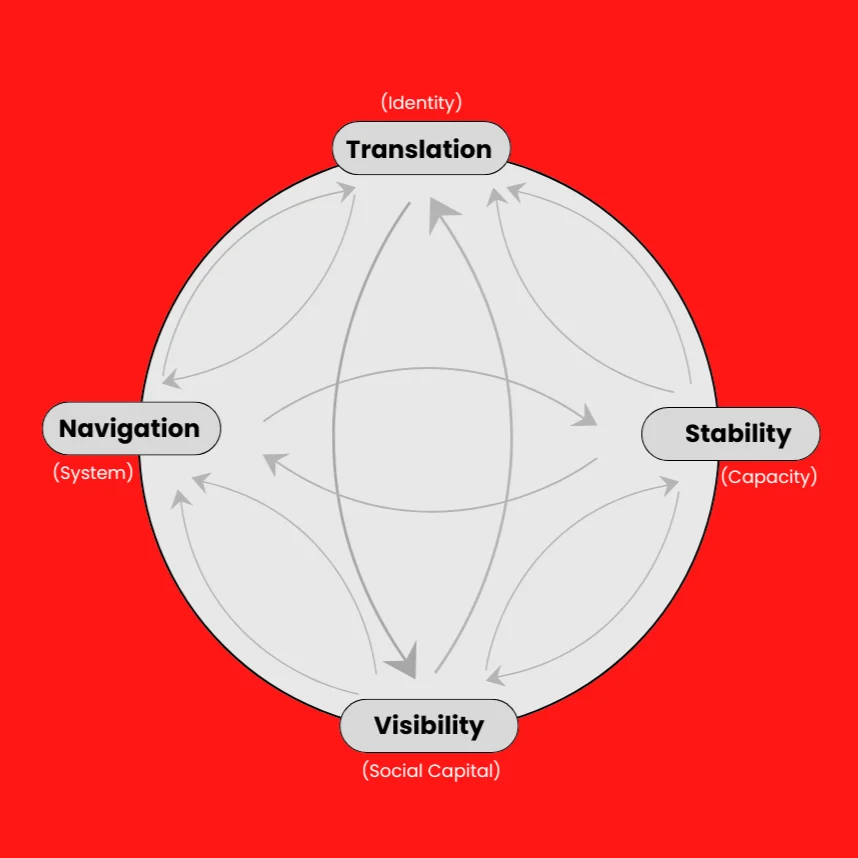
Activation mapping
How this story maps into activation.
Main signal
Navigation
- Primary
- Navigation
- Secondary
- Stability
- Translation
- Supporting
- Visibility
Everyday meaning
What this means in everyday life
This episode is about finding a next step when the future feels unclear. Ramila shows how imagining different futures can change how people see the present.
See more futures
Imagining more than one future can loosen the feeling that there is only one possible path.
Notice today differently
Looking ahead can help people see current choices, habits, and assumptions more clearly.
Choose a next step
People can move again when they can name what is uncertain and still choose one useful action.
Learn while moving
Not every change can be planned, so people need ways to learn as the situation unfolds.
Everyday question
Can imagining possible futures help you act more clearly in the present?
Editorial Report
What this conversation reveals.
This conversation is about widening the future so the present becomes easier to read. Ramila Khafaji Zadeh introduces futures literacy not as prediction, but as a capability: imagining different futures to see the present anew. The episode is especially useful for people in uncertain career moments, where the pressure to choose one “right” path can make the next step feel heavier than it needs to be.
What stands out
Futures literacy is not prediction
Ramila makes the distinction clear. Futures literacy is not mainly about forecasting what will happen. It is about using imagined futures to understand the present differently. That changes the tone of future thinking: from trying to be right about one future to becoming more open to what might emerge.
The plural matters
The word “futures” is important because there is not one fixed future waiting for everyone. Different people imagine different futures from where they stand. When people notice that, they can stop treating one scenario as inevitable and start seeing more possible routes.
Agency can begin with being asked
One of the most powerful points in the conversation is that asking people how they imagine the future can itself be empowering. In many contexts, institutions tell people what the future will be. Being asked to imagine it creates recognition, voice, and a different sense of participation.
Active openness is not passivity
The career section is especially useful. Ramila does not suggest waiting forever or ignoring practical constraints. She acknowledges real pressures such as visas, money, and the job market. But she also offers a different posture: if possible, stay actively open. Imagine more than one path and let that widen what you can do now.
Planning needs emergence
The episode does not reject planning or preparation. It adds another capability: openness to emergence. Planning helps people survive and prepare, but emergence helps them adapt when something happens that they did not expect.
Why it matters
Many international students, founders, and early-career professionals feel pushed to decide quickly and choose correctly. This episode suggests that career navigation can become less rigid when people imagine multiple futures and use those futures to notice what is possible in the present.
Activation lens
This is a Navigation episode. It shows how people move through uncertainty by widening the paths they can imagine, staying open to emergence, and choosing small next steps without needing full certainty first.
A question to carry
Where are you treating one possible future as the only path, and what becomes visible if you imagine two or three more?
Next steps
Where to go next
Start with one small step from here. Check your situation, clarify your profile, explore the wider context, or keep following the stories.