
Bennu by Flux ForwardChapter One · Episode 11
Beyond Sustainability
How regenerative transformation helps organizations move from sustainability claims to real practice
Where this connects
What this episode helps you notice.
Main thing to notice
Navigation
How you find your way through unfamiliar systems, choices, and routes.
Related skill
Stability
What needs to feel steady before the next step becomes possible.
What to do with this
Notice where this story points to a next step in your own context.
Browse related stories
Conversation frame
Beyond Sustainability
Why this conversation still matters
In this Chapter One Bennu conversation, Ben speaks with Alex Baker-Friesen about sustainability transformation, regenerative thinking, organizational change, and the human competencies needed to create meaningful impact.
Alex shares why organizations need to move beyond sustainability as a label and treat it as real practice: defining what they mean, mapping stakeholders, slowing down before communicating too early, and building the internal capacity to work with complexity.
Read through the Flux Forward Activation lens, this is a Navigation episode: transformation becomes more possible when people can understand the system they are in, name the work clearly, and create enough space for thoughtful action.
Guest
Alex Baker-Friesen
A Bennu conversation about the human story behind a Flux Forward signal.
Open LinkedIn profileListen for
Notice where this story points to a next step in your own context.
- Navigation
- Stability
Key signals
What the episode reveals.
Main pattern
Your experience becomes easier to use when you can name what it shows.
Bennu holds the story. Flux Forward helps turn it into a clearer next step.
Main thing to notice
Navigation
How you find your way through unfamiliar systems, choices, and routes.
Related skill or context
Stability
What needs to feel steady before the next step becomes possible.
Context
Context matters
How regenerative transformation helps organizations move from sustainability claims to real practice
What to try next
Start smaller
Look for one conversation, one clearer explanation, or one better example that would make the next step easier to act on.
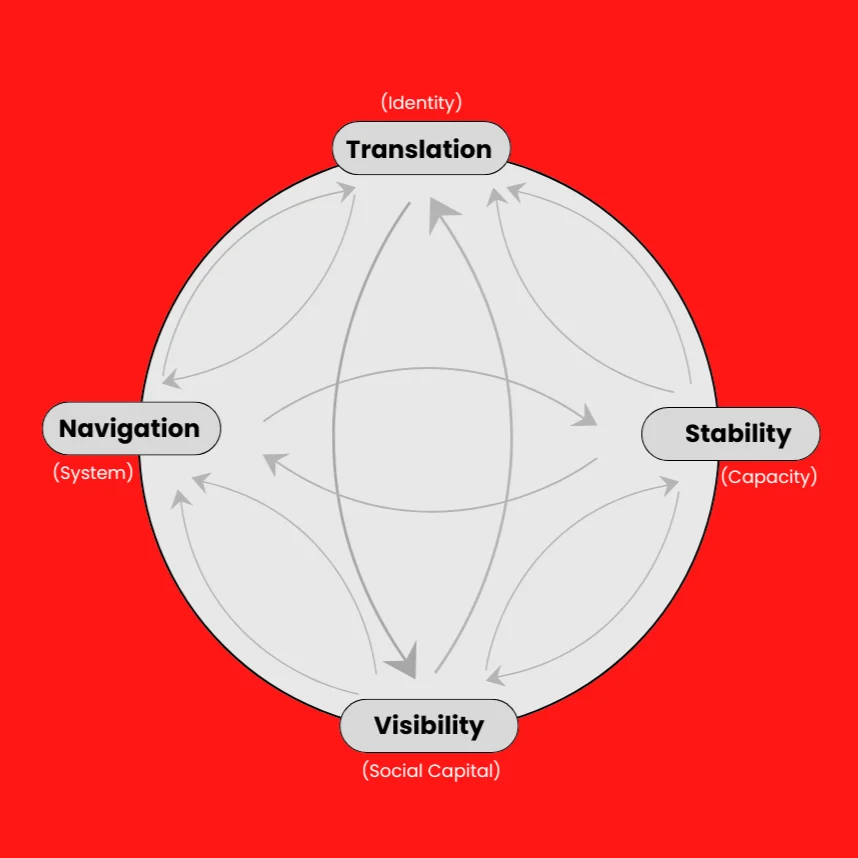
Activation mapping
How this story maps into activation.
Main signal
Navigation
- Primary
- Navigation
- Secondary
- Stability
- Translation
- Supporting
- Visibility
Everyday meaning
What this means in everyday life
This episode is about moving beyond sustainability as a label. Alex shows that real transformation depends on practice, relationships, and the human work behind change.
Move past labels
Sustainability becomes meaningful when it changes decisions, habits, responsibilities, and how people work together.
Practice regeneration
Regenerative work asks what a place, team, or system needs in order to keep becoming healthy.
Build inner capacity
External change is harder when people lack reflection, courage, and the skills to face discomfort.
Make impact real
Claims become stronger when they are connected to visible choices and daily organizational behavior.
Everyday question
Can sustainability become something people practice, not only something they claim?
Editorial Report
What this conversation reveals.
This conversation is about moving beyond sustainability as a claim and toward sustainability as practice. Alex Baker-Friesen brings a systems and transformation lens to the work of organizations trying to create meaningful impact. The episode does not reject sustainability as a word. It asks what has to happen for sustainability to become real: clearer definitions, deeper reflection, stronger internal capability, and more space for people to act together.
What stands out
Sustainability needs a clear meaning
One of Alex’s first points is surprisingly practical: many organizations start sustainability work without defining what they mean. They hire people, adopt frameworks, or prepare communications, but the internal meaning is still unclear. Without shared language, the work becomes hard to guide and easy to dilute.
Regeneration asks for a deeper shift
Alex frames regeneration as a deeper move beyond only maintaining or reducing harm. It points toward repairing and renewing the systems that have already been damaged. That makes the work more complex, but also more honest. The goal is not only to look sustainable. It is to change how the organization relates to people, society, and living systems.
Frameworks are useful, but not enough
The conversation acknowledges the value of frameworks, standards, and models, but also warns against getting lost in them. Organizations can become overwhelmed by diagrams, regulations, and trends. Alex’s practical move is to return to context: what system are we describing, who is affected, and what does this organization actually need to understand before acting?
Leadership creates space for practice
A strong theme in the episode is leadership as space-making. Alex connects transformation to praxis: people practicing skills together to create something new. That requires leaders who can hold space, build trust, and allow people to think, question, and learn rather than simply react to the next demand.
Inner work is part of organizational change
The episode also brings sustainability into the human layer. Emotional intelligence, self-awareness, presence, and reflection are not secondary skills. Alex argues that people with more responsibility have more influence, which makes inner work part of responsible leadership.
Why it matters
Many founders, professionals, and organizations want to work on sustainability but feel pulled into urgency, communications pressure, and constant frameworks. This episode offers a slower and stronger starting point: define what you mean, understand the system around you, build internal capability, and only then communicate what is true.
Activation lens
This is a Navigation episode. It shows how people move through complexity by mapping context, resisting one-size-fits-all blueprints, and creating the conditions for thoughtful action.
A question to carry
Where are you trying to communicate progress before your team has created the shared understanding needed to make that progress real?
Next steps
Where to go next
Start with one small step from here. Check your situation, clarify your profile, explore the wider context, or keep following the stories.