
Bennu by Flux ForwardChapter One · Episode 02
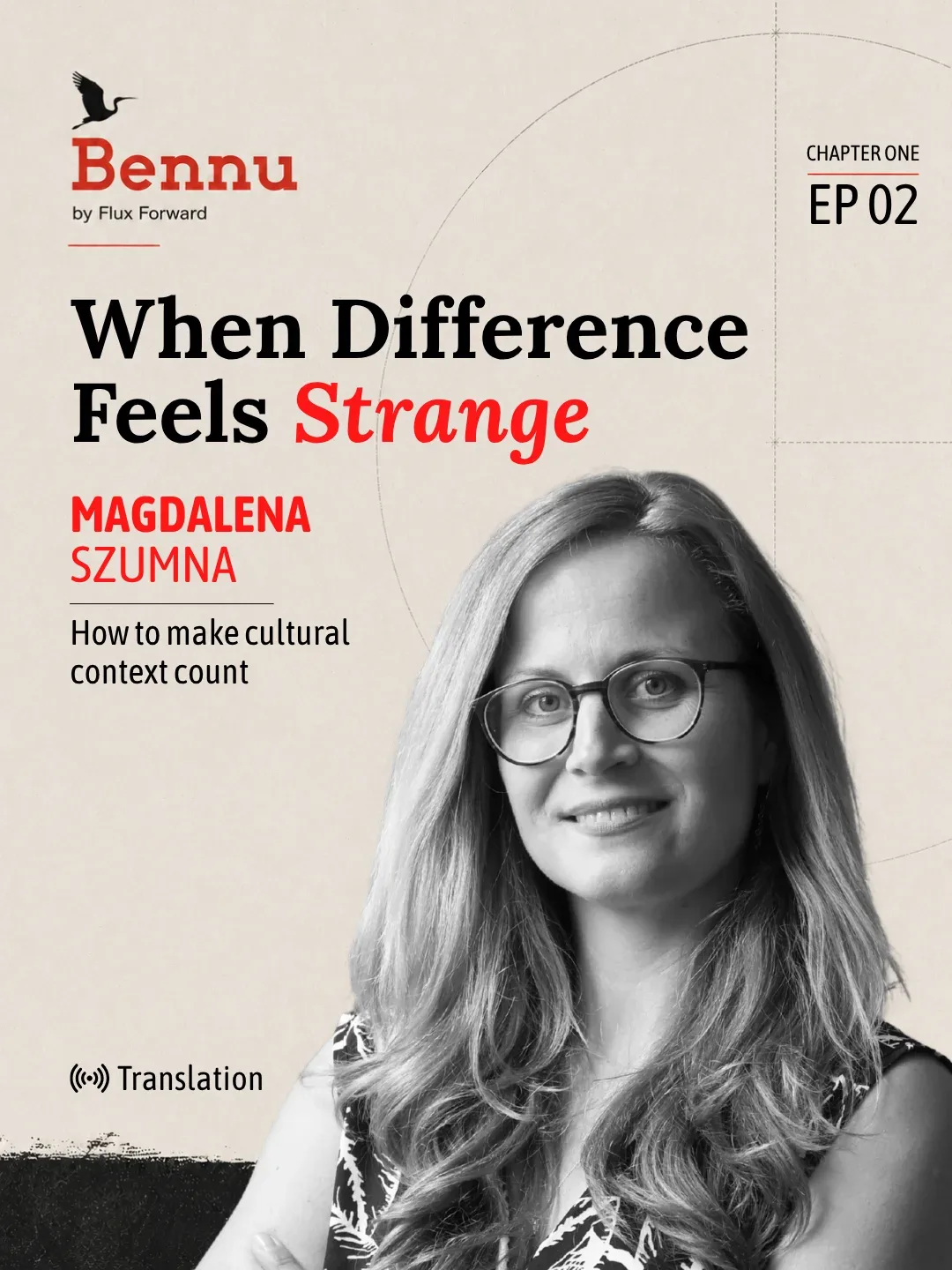
When Difference Feels Strange
How to make cultural context count
Where this connects
What this episode helps you notice.
Main thing to notice
Translation
How your experience becomes understandable to other people.
Related skill
Stability
What needs to feel steady before the next step becomes possible.
What to do with this
Notice where this story points to a next step in your own context.
Browse related stories
Conversation frame
When Difference Feels Strange
Why this conversation still matters
In this Chapter One Bennu conversation, Magdalena Szumna and Ben explore intercultural competence: what happens when difference feels strange, and how that moment can become useful information rather than a reason to withdraw or judge.
The episode looks at self-awareness, values, norms, directness, language barriers, curiosity, and the practical work of asking for clarity. Magdalena frames intercultural competence not as a checklist of other cultures, but as a way to pause, notice your assumptions, and communicate more intentionally.
Read through the Flux Forward Activation lens, this is a Translation episode: unfamiliar behaviour becomes easier to navigate when you learn how to read the context behind it.
Guest
Magdalena Szumna
A Bennu conversation about the human story behind a Flux Forward signal.
Open LinkedIn profileListen for
Notice where this story points to a next step in your own context.
- Translation
- Stability
Key signals
What the episode reveals.
Main pattern
Your experience becomes easier to use when you can name what it shows.
Bennu holds the story. Flux Forward helps turn it into a clearer next step.
Main thing to notice
Translation
How your experience becomes understandable to other people.
Related skill or context
Stability
What needs to feel steady before the next step becomes possible.
Context
Context matters
How to make cultural context count
What to try next
Start smaller
Look for one conversation, one clearer explanation, or one better example that would make the next step easier to act on.
Activation mapping
How this story maps into activation.
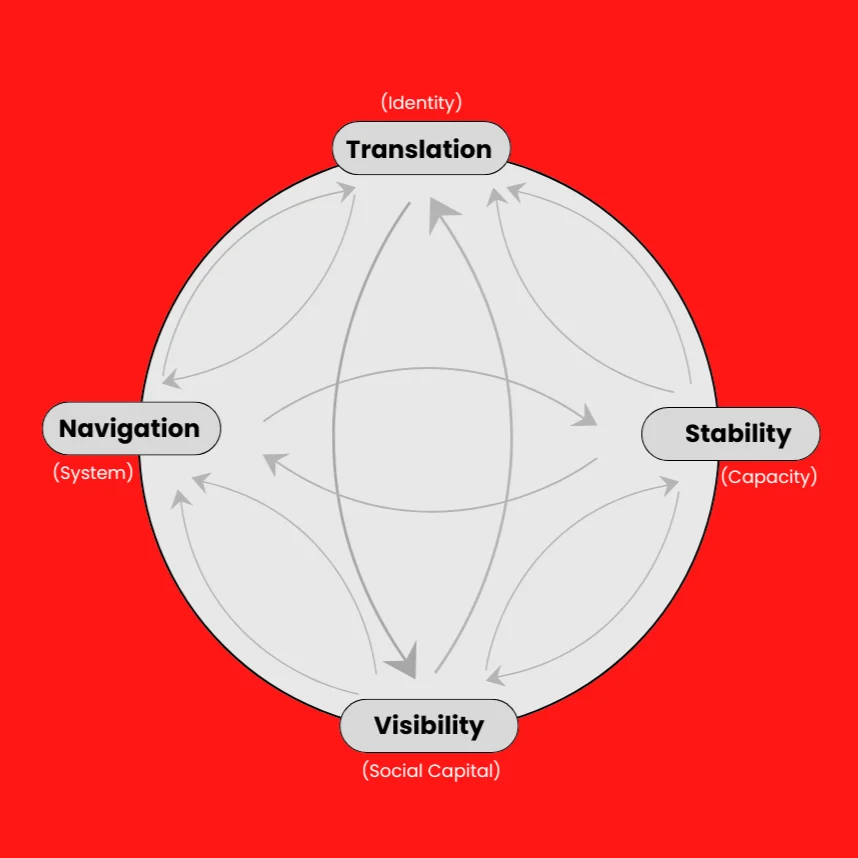
Main signal
Translation
- Primary
- Translation
- Secondary
- Navigation
- Supporting
- Stability
- Visibility
Everyday meaning
What this means in everyday life
This episode is about what happens when culture, language, and expectations do not line up. Magdalena turns moments of difference into chances to pause, ask, and understand context.
Pause before judging
When something feels strange, the first useful move is often to slow down before deciding what it means.
Ask better questions
Curiosity can turn confusion into useful information about values, habits, and expectations in a new setting.
Translate context
Communication improves when people explain not only what they mean, but why it matters in their culture.
Notice your assumptions
Self-awareness helps you see which reactions come from the situation and which come from your own expectations.
Everyday question
Can difference become a signal to understand more, rather than a reason to pull back?
Editorial Report
What this conversation reveals.
This conversation is about what happens when cultural difference becomes visible in daily communication. Magdalena Szumna frames intercultural competence not as a nice extra, but as a core skill for studying, working, and leading in multicultural environments. For international students, the episode turns moments of discomfort into moments of learning.
What stands out
Strangeness is information
Magdalena describes intercultural encounters as moments where something feels strange, uncomfortable, direct, indirect, cold, confusing, or unfamiliar. Instead of treating that feeling as a problem, she invites students to treat it as information. The feeling of difference can reveal what values, norms, and expectations are active in the situation.
Self-awareness comes before adaptation
A key pattern in the conversation is that intercultural competence starts with noticing yourself. Before judging another person’s behavior, students can ask: why did this feel strange to me? What did I expect? What value or norm am I bringing into this interaction? That self-awareness creates more space for curiosity.
Directness is not always rudeness
The conversation gives a practical example that many internationals in the Netherlands recognize: direct communication. What can first feel rude or abrupt may be connected to values like transparency, honesty, and clarity. Understanding the value behind the behavior does not mean you have to like everything, but it helps reduce misunderstanding.
Language confidence is part of the transition
Magdalena also points to language as a real part of intercultural work. Speaking in a second language can affect confidence, nuance, and how people interpret each other. The invitation is to be transparent, ask people to slow down or rephrase, and not wait for perfect fluency before participating.
Why it matters
International students often live inside intercultural encounters every day, in class, at work, in group projects, in job interviews, and in social life. This episode gives them a practical way to approach those moments: slow down, stay curious, notice the values underneath behavior, and learn how to adapt without losing themselves.
Activation lens
This is a Translation episode. It shows how cultural context becomes easier to navigate when people can name the difference, understand what it means, and adjust how they communicate across expectations.
A question to carry
Where have you recently felt that someone’s behavior was strange, and what might that moment be teaching you about your own expectations as well as theirs?
Next steps
Where to go next
Start with one small step from here. Check your situation, clarify your profile, explore the wider context, or keep following the stories.