
Bennu by Flux ForwardChapter One · Episode 36
Human-Centered AI
Liisa-Maija Malinen on systems thinking, values, learning, and using AI as a partner for real change.
Where this connects
What this episode helps you notice.
Main thing to notice
Translation
How your experience becomes understandable to other people.
Related skill
Visibility
How your value becomes easier for others to recognize.
What to do with this
Notice where this story points to a next step in your own context.
Browse related stories
Conversation frame
Human-Centered AI
Why this conversation still matters
Liisa-Maija Malinen explores AI not as a replacement for human agency, but as a thinking partner that needs guidance, values, critical thinking, and systems awareness.
This Bennu by Flux Forward conversation moves through sustainability, transformational learning, facilitation, AI as a learning partner, bias, equity, imagination, and the question of what we would teach AI if we treated it like a child.
AI is already shaping how people learn, work, decide, and imagine futures. But if organizations only use it for productivity, automation, or speed, they may reproduce the same systems that created today’s problems. Liisa-Maija’s perspective asks a deeper question: how can we guide AI with values that support people, communities, and the planet?
The main pattern in this episode is the shift from tool to thinking partner. That shift requires better prompts, better values, better data, and better questions about systems, fairness, sustainability, and the future we want to create.
Guest
Liisa-Maija Malinen
A Bennu conversation about the human story behind a Flux Forward signal.
Open LinkedIn profileListen for
Notice where this story points to a next step in your own context.
- Translation
- Visibility
Key signals
What the episode reveals.
Main pattern
Your experience becomes easier to use when you can name what it shows.
Bennu holds the story. Flux Forward helps turn it into a clearer next step.
Main thing to notice
Translation
How your experience becomes understandable to other people.
Related skill or context
Visibility
How your value becomes easier for others to recognize.
Context
Context matters
Liisa-Maija Malinen on systems thinking, values, learning, and using AI as a partner for real change.
What to try next
Start smaller
Look for one conversation, one clearer explanation, or one better example that would make the next step easier to act on.
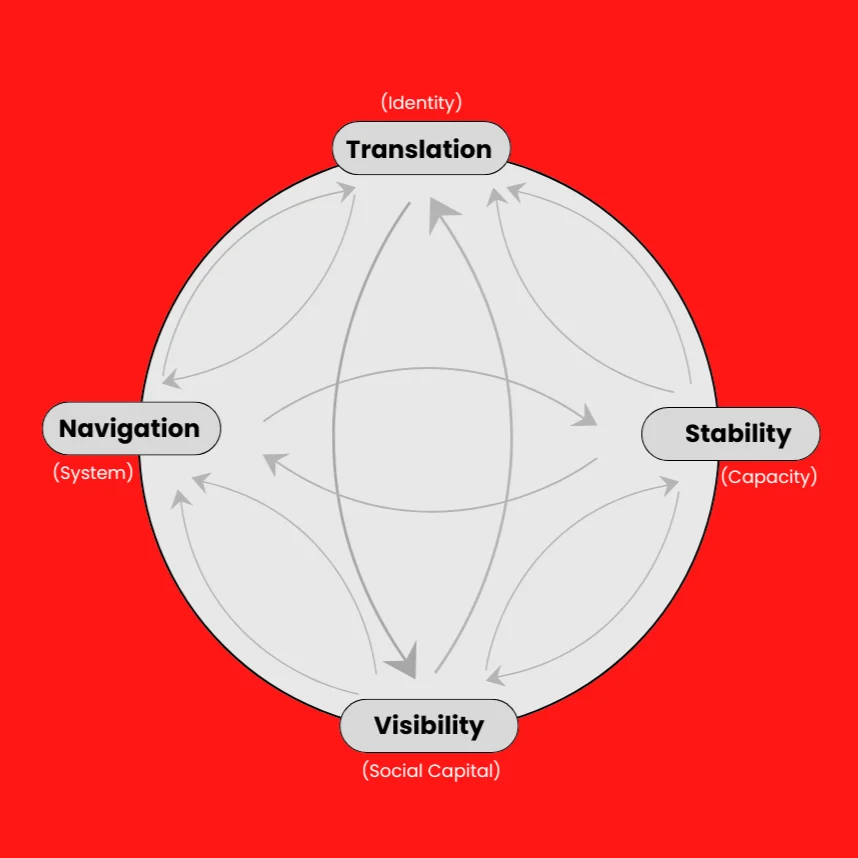
Activation mapping
How this story maps into activation.
Main signal
Translation
- Primary
- Translation
- Secondary
- Visibility
- Navigation
- Supporting
- Stability
Everyday meaning
What this means in everyday life
This episode is about using AI with values, judgment, and systems awareness. Liisa-Maija shows how AI can support learning and change when humans stay responsible.
Guide the tool
AI becomes more useful when people give it direction, context, and careful questions.
Check for bias
Responsible use means noticing where a tool may reproduce unfair assumptions or miss important context.
Think in systems
AI decisions affect people, relationships, incentives, and consequences beyond the immediate task.
Keep humans central
Technology should support agency and learning, not replace the need for judgment and care.
Everyday question
Can AI help more when people stay clear about values and responsibility?
Editorial Report
What this conversation reveals.
This conversation is about what it means to guide AI before AI guides us. Liisa-Maija Malinen does not speak about AI as a magic solution or a simple threat. She speaks about it as something already entering our learning, work, decisions, and systems, and therefore something that needs human values, critical thinking, and systems awareness.
What stands out
The first thing that stands out is Liisa-Maija’s use of AI as a thinking partner. She does not describe a one-way relationship where the human gives a task and the machine produces an answer. She describes an ongoing dialogue: teaching, testing, refining, questioning, and learning together.
The second thing that stands out is the connection between AI and systems thinking. Liisa-Maija wants AI to help people see wider patterns, not only produce faster outputs. That includes noticing missing perspectives, questioning dominant narratives, and helping people think about sustainability and change more deeply.
The third thing that stands out is the importance of values. AI already carries values from the people, companies, data, and systems that shape it. The question is not whether values are present. The question is whose values are present, and whether teams and organizations are intentional about the values they want AI to reflect.
The fourth thing that stands out is the invitation to people with strong ethics to participate. Liisa-Maija acknowledges the concerns around AI, including energy use, bias, and power. But she also makes a strong point: if people committed to fairness, sustainability, and justice step away, the future of AI will be shaped without them.
Why it matters
Many professionals, founders, educators, facilitators, and organizations are trying to understand AI while also worrying about its risks. This episode offers a useful shift: do not only ask how to use AI. Ask how to teach it, guide it, question it, and shape it toward human and planetary values.
Activation lens
This is a Translation episode. It shows how values, systems thinking, sustainability, fairness, and learning can be translated into how people work with AI. Visibility matters because biases and missing voices need to be seen. Navigation matters because AI can help explore possible pathways through complexity. Stability matters because trustworthy AI requires grounded human guidance.
A question to carry
If you could teach AI one value this week, what would it be?
Next steps
Where to go next
Start with one small step from here. Check your situation, clarify your profile, explore the wider context, or keep following the stories.