
Bennu by Flux ForwardChapter One · Episode 06
Future-Ready at Work
How curiosity, trust, feedback, and boundaries help people grow in a changing workplace
Where this connects
What this episode helps you notice.
Main thing to notice
Stability
What needs to feel steady before the next step becomes possible.
Related skill
Navigation
How you find your way through unfamiliar systems, choices, and routes.
What to do with this
Notice where this story points to a next step in your own context.
Browse related stories
Conversation frame
Future-Ready at Work
Why this conversation still matters
In this Chapter One Bennu conversation, Ben speaks with Jaël Oterdoom about people, operations, leadership, and the future of work in a fast-moving tech environment. The conversation moves from her non-linear professional path into how teams build trust, work across cultures, and stay curious while AI changes the workplace around them.
Jaël shares how respect for the individual, transparency, feedback, listening, and clear coaching can shape healthier team dynamics. She also reflects on AI, burnout, boundaries, and the pressure many people feel to always do more.
Read through the Flux Forward Activation lens, this is a Stability episode: people can adapt to change more sustainably when the working environment makes space for trust, feedback, curiosity, and recovery.
Guest
Jaël Oterdoom
A Bennu conversation about the human story behind a Flux Forward signal.
Open LinkedIn profileListen for
Notice where this story points to a next step in your own context.
- Stability
- Navigation
Key signals
What the episode reveals.
Main pattern
Your experience becomes easier to use when you can name what it shows.
Bennu holds the story. Flux Forward helps turn it into a clearer next step.
Main thing to notice
Stability
What needs to feel steady before the next step becomes possible.
Related skill or context
Navigation
How you find your way through unfamiliar systems, choices, and routes.
Context
Context matters
How curiosity, trust, feedback, and boundaries help people grow in a changing workplace
What to try next
Start smaller
Look for one conversation, one clearer explanation, or one better example that would make the next step easier to act on.
Activation mapping
How this story maps into activation.
Main signal
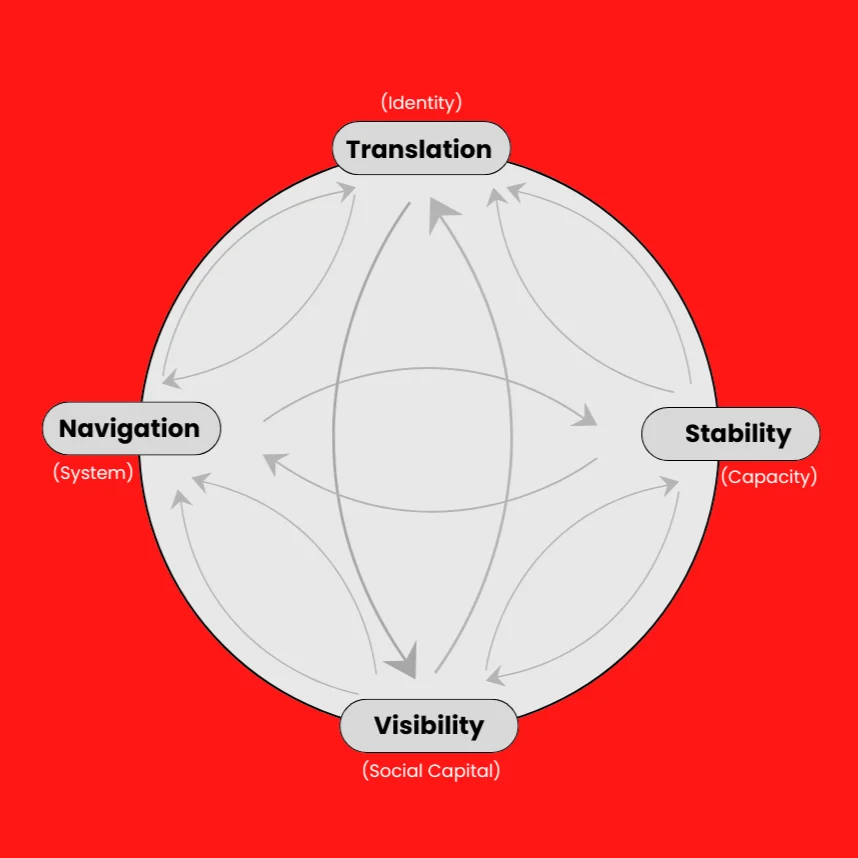
Stability
- Primary
- Stability
- Secondary
- Navigation
- Translation
- Supporting
- Visibility
Everyday meaning
What this means in everyday life
This episode is about staying human in a workplace that keeps changing. Jaël points to trust, feedback, curiosity, and boundaries as everyday conditions for growth.
Keep curiosity active
Curiosity helps people keep learning when tools, roles, and expectations shift around them.
Use feedback well
Feedback becomes useful when it is specific, safe to hear, and connected to real growth.
Set clear boundaries
People work better when ambition is balanced with rest, focus, and honest limits.
Build team trust
Change feels less threatening when people know they can ask questions and be honest with each other.
Everyday question
Can work become more future-ready by becoming more human first?
Editorial Report
What this conversation reveals.
This conversation is about how people stay steady while work keeps changing. Jaël Oterdoom brings a people and operations lens to the future of work: teams need curiosity, trust, feedback, and clear boundaries if they want to grow in fast-moving environments. The episode does not treat AI as a separate technology topic. It treats it as part of a wider question: how do people keep learning, collaborating, and protecting their energy when the workplace keeps shifting?
What stands out
Respect for the individual creates better teams
Jaël starts from a simple leadership principle: people are different. They need different kinds of feedback, motivation, support, and communication. In a multicultural team, this matters even more. What feels direct and efficient to one person may feel abrupt to another. Good leadership notices those differences instead of forcing everyone into one style.
Trust is built through transparency and feedback
The conversation shows that trust is not only a feeling. It is built through habits. Jaël points to transparency and feedback as core parts of Klippa’s culture: sharing what is happening, making expectations visible, celebrating what works, and naming what could be better. In that kind of environment, people are more likely to understand where they stand.
Curiosity is a future-ready skill
When Ben asks about essential skills, Jaël highlights curiosity, listening, ownership, and guts. Curiosity matters because it keeps people from filling in the blanks too quickly. It helps them ask better questions, understand each other, and stay open when the world of work changes.
AI changes work, but people still need judgment
The episode does not present AI as only a threat or only an opportunity. Jaël describes it as another major shift that will change some tasks and create new ones. For students and professionals, the useful move is not panic. It is learning how to work with the tools, understand where they help, and keep developing the human skills that make collaboration possible.
Boundaries protect long-term contribution
One of the most grounded parts of the conversation is Jaël’s reflection on burnout. She connects high pressure, perfectionism, and internal expectations. The lesson is not just to work harder or become more resilient. It is to notice when the load is too much, ask for help, reprioritize, and protect the time where work is done.
Why it matters
Many students and early-career professionals are entering workplaces that are changing quickly. They may feel pressure to have one passion, one perfect plan, or one future-proof role. This episode offers a more human approach: try things, stay curious, listen well, build trust, use AI where it helps, and do not ignore the signals that your system needs rest.
Activation lens
This is a Stability episode. It shows that future-readiness is not only about learning new tools. It is also about creating the conditions where people can keep learning without burning out.
A question to carry
What boundary, feedback habit, or curiosity practice would help you stay steady while your work keeps changing?
Next steps
Where to go next
Start with one small step from here. Check your situation, clarify your profile, explore the wider context, or keep following the stories.