
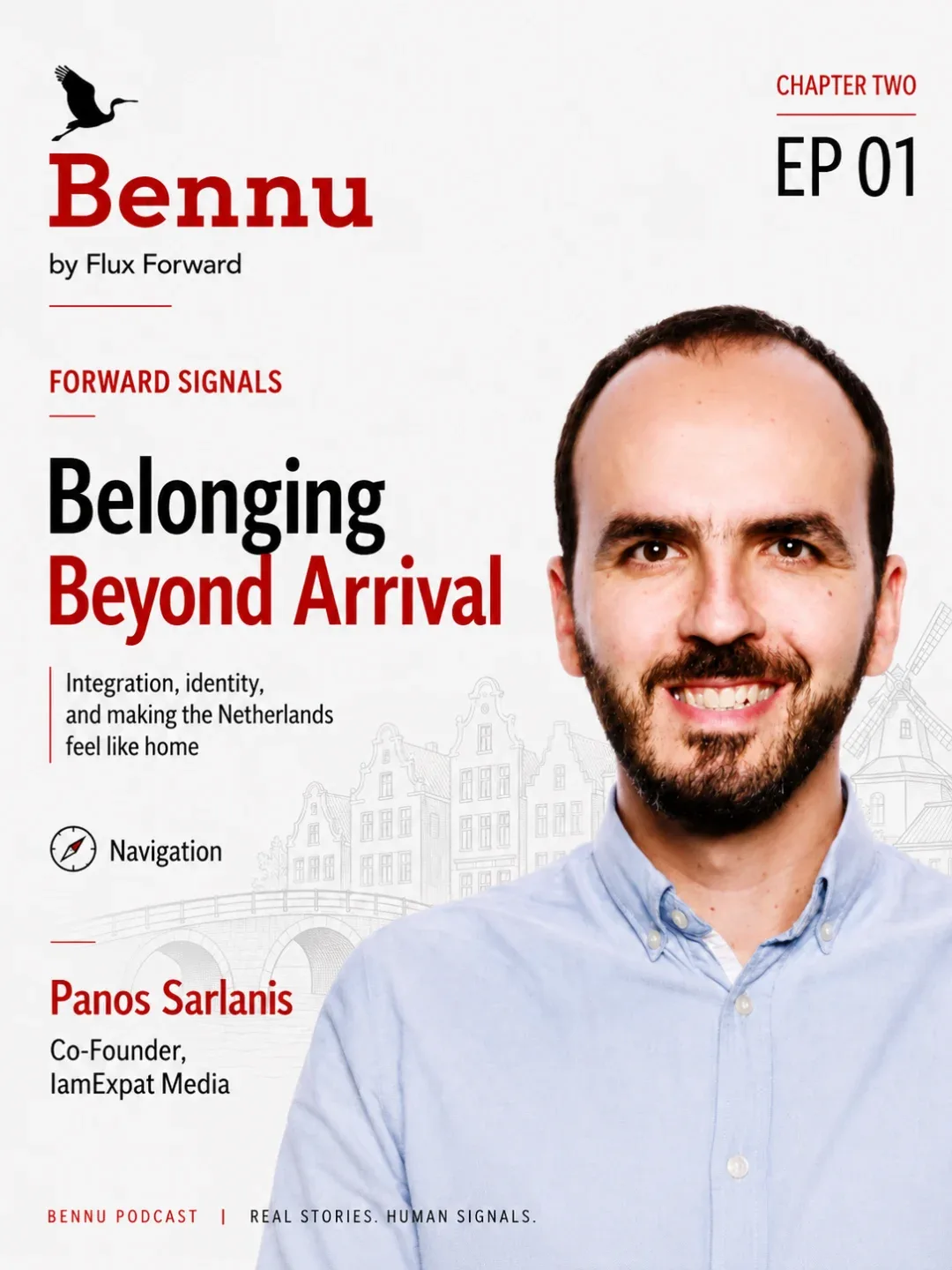
Bennu by Flux ForwardChapter Two · Episode 01
Belonging Beyond Arrival
Panos Sarlanis reflects on integration, identity, and what it means to make the Netherlands feel like home.
Where this connects
What this episode helps you notice.
Main thing to notice
Navigation
How you find your way through unfamiliar systems, choices, and routes.
Related skill
Translation
How your experience becomes understandable to other people.
What to do with this
Notice where this story points to a next step in your own context.
Browse related stories
Conversation frame
Belonging Beyond Arrival
Why this conversation still matters
What does it take to build a life in a new country?
In the opening episode of Chapter Two of Bennu by Flux Forward, Ben Brink and Charline Friesen speak with Panos Sarlanis, Co-Founder of IamExpat Media, about migration, belonging, integration, and making the Netherlands feel like home.
The conversation explores the practical and emotional layers of international life: housing, work, language, community, bureaucracy, non-EU uncertainty, and the social climate facing internationals in the Netherlands.
Panos reflects on building IamExpat, supporting international communities, and the difference between being in a country and feeling part of it.
At its heart, this episode asks: when people ask where you are from, what begins to feel like home?
Guest
Panos Sarlanis
A Bennu conversation about the human story behind a Flux Forward signal.
Open LinkedIn profileListen for
Notice where this story points to a next step in your own context.
- Navigation
- Translation
Key signals
What the episode reveals.
Main pattern
Your experience becomes easier to use when you can name what it shows.
Bennu holds the story. Flux Forward helps turn it into a clearer next step.
Main thing to notice
Navigation
How you find your way through unfamiliar systems, choices, and routes.
Related skill or context
Translation
How your experience becomes understandable to other people.
Context
Context matters
Panos Sarlanis reflects on integration, identity, and what it means to make the Netherlands feel like home.
What to try next
Start smaller
Look for one conversation, one clearer explanation, or one better example that would make the next step easier to act on.
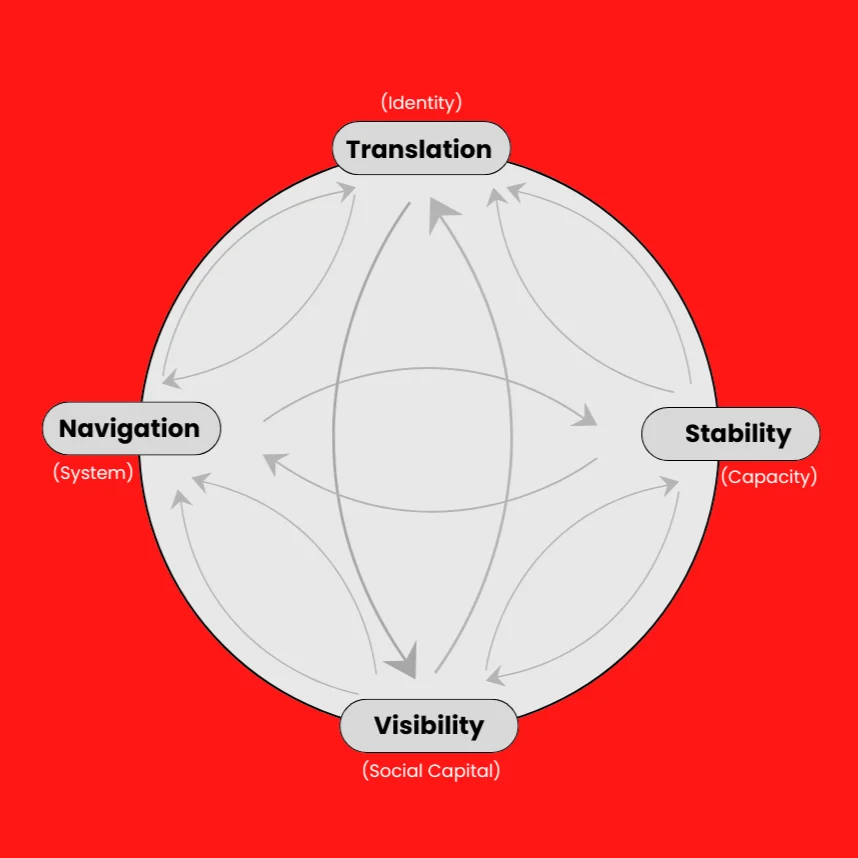
Activation mapping
How this story maps into activation.
Main signal
Navigation
- Primary
- Navigation
- Secondary
- Translation
- Stability
- Supporting
- Visibility
Everyday meaning
What this means in everyday life
This episode is not only about moving to the Netherlands. It is about what happens after arrival, when the practical questions slowly turn into deeper ones: how do I understand this place, how do I build trust, how do I participate, and when does this start to feel like home?
Arrival is only the first layer
A job, a house, and the right paperwork matter. But they do not automatically create belonging. Many people arrive before they actually feel part of the place they live in.
Information reduces uncertainty
When you are new to a country, clear information is not just practical. It helps calm the system. Knowing where to go, who to ask, and what to expect makes the next step feel possible.
Community can be a bridge or a bubble
International circles can give recognition and support, especially at the beginning. Over time, the question becomes whether they also help you connect beyond the bubble.
Home is built through participation
Feeling at home grows through repeated contact: language, neighbors, work, schools, local systems, and everyday routines. Belonging becomes real when the place starts to include your life.
Everyday question
Everyday question: where are you still only managing the system, and what small step would help you feel more part of it?
Editorial Report
What this conversation reveals.
Belonging Beyond Arrival opens Chapter Two of Bennu with a shift in focus. Chapter One looked closely at becoming through personal journeys. This conversation moves into the field around those journeys: the systems, communities, signals, and social climates that shape whether people can actually build a life in a new place.
What stands out
The most important pattern in this episode is that arrival and belonging are not the same thing. A person can arrive, work, rent a house, and still remain outside the deeper life of a society. Panos describes the practical layers of relocation, but the conversation keeps returning to something more human: the need to feel connected, trusted, seen, and able to participate.
Why it matters
This matters for internationals because many struggles are misread as individual problems. People are told to integrate, learn the language, network, adapt, and be resilient. Those things matter. But the episode shows that people also need navigable systems, reliable information, affordable routes into language learning, access to community, and a social climate that does not constantly make them feel provisional.
Activation lens
The primary signal is Navigation. Panos’ work with IamExpat is essentially navigation work: helping internationals understand the country before and after arrival, find trusted services, meet others, and reduce the uncertainty of a new system. But the signal does not stop at practical information. Navigation also means finding routes into belonging: knowing where to go, who to ask, how to participate, and how to make the new context readable.
A question to carry
Where in your life are you still only “in” a place, and what would help you begin to feel part of it?
Next steps
Where to go next
Start with one small step from here. Check your situation, clarify your profile, explore the wider context, or keep following the stories.